
Başbaşı bulgur: a guide to coarse whole-kernel bulgur
When people outside Turkey say "bulgur", they usually mean one thing: a small bag of cracked wheat on the world-foods shelf. In a Gaziantep kitchen there are at least four kinds in the cupboard, and nobody would dream of using one for another. The biggest of them is başbaşı bulgur, the coarse whole-kernel type. It is the one I reach for in October, when the evenings turn cold and I want a pilaf with real chew to it, something that holds up under a ladle of stew.
This guide explains what başbaşı bulgur is, how it differs from the other grades, how much water it needs, and which dishes it suits. At the end there is one master pilaf. Learn that, and the rest follows.
What bulgur is, briefly
All bulgur starts the same way. Wheat, usually hard durum wheat, is boiled until cooked through, dried (traditionally on flat roofs in late summer), then husked and cracked. The cracking decides the grade. Because the grain was cooked before drying, bulgur only needs rehydrating and warming, not real cooking from raw. That is why fine bulgur softens with just hot water poured over it, and why even the coarsest kind is ready in about 20 minutes.
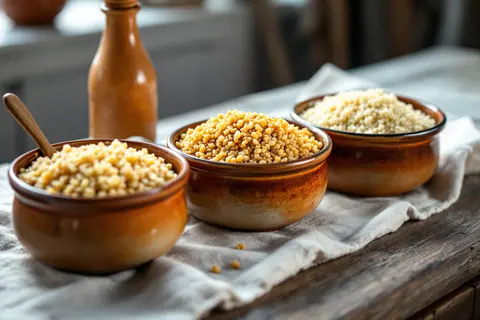
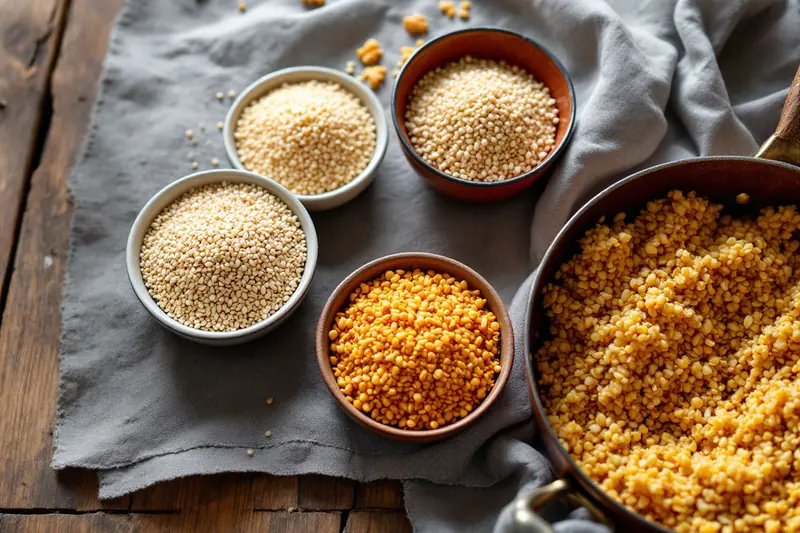
Başbaşı bulgur is cracked the least. Many grains are whole, with the rest broken roughly in half. The name is often explained as "head to head", meaning grains kept whole, end to end, though families tell it in different ways. What matters in the pan is the size: each grain is about as big as a grain of rice, plump and golden brown.
The grades side by side
This is the table I wish someone had given me when I first moved to Bristol and had to explain my cupboard to friends:
| Grade | Turkish name | Grain size | How to prepare | Used for |
|---|---|---|---|---|
| Whole-kernel, coarsest | başbaşı bulgur | Like rice, many whole | Simmer 20 to 25 min, rest 15 | Hearty pilafs, stuffings, soups |
| Coarse | pilavlık bulgur | Half a lentil | Simmer 15 min, rest 15 | Everyday pilafs |
| Fine | köftelik bulgur | Like couscous | Soak in hot water 15 to 20 min | Kısır, köfte, içli köfte shells |
| Extra fine | çiğ köftelik or simit bulgur | Like semolina | Kneaded with water | Çiğ köfte, fine köfte |
The coarser the grain, the more it behaves like rice and the more chew it keeps. The finer it is, the more it behaves like a dough. Using fine bulgur in a pilaf gives you porridge. Using başbaşı in kısır gives you a bowl of hard, separate grains that will not take a dressing.
How much water başbaşı bulgur needs
Because the grains are big, they need a little more liquid and a little more time than pilaf bulgur. My working ratio is 1 cup of başbaşı bulgur to 2 1/4 cups of hot liquid when there is nothing wet in the pan, and 2 cups to 1 cup when there are fresh tomatoes or a lot of vegetables. Simmer it covered on the lowest heat for 20 to 22 minutes, then rest it under a towel for 15.
Here is what that means in a real kitchen, worked out for the master pilaf below:
- 2 cups (340 g) başbaşı bulgur, 4 1/2 cups (1.08 litres) hot stock: serves 6 as a side.
- Scale to 10 people: 3 1/2 cups (595 g) bulgur and 7 3/4 cups (1.86 litres) stock. Use a pan at least 30 cm wide, so the layer of grain is no deeper than about 5 cm before cooking.
- Scale down to 2: 3/4 cup (130 g) bulgur and 1 2/3 cups (400 ml) stock in an 18 cm pan. Small amounts lose steam quickly, so check at 18 minutes.
Bulgur from different harvests varies a little. If your first pan comes out firm in the centre, add 2 tablespoons more liquid per cup next time and write it on the jar.
Which dishes suit it
Başbaşı bulgur is at its best in anything where you want each grain to be noticed. A plain buttered pilaf with good stock is the classic, and it is the master recipe here. It is excellent with chickpeas, because both have the same round, chewy bite. The chickpea bulgur pilaf works beautifully with başbaşı instead of ordinary coarse bulgur; just add the extra quarter cup of liquid per cup of grain.
Vegetable pilafs suit it too. In my vegetable bulgur pilaf, coarse pilaf bulgur is the default, but başbaşı gives a heartier dish that eats like a main course. The same goes for mushroom bulgur pilaf, where the big grains stand up to the meaty mushrooms.
Beyond pilaf, a handful of başbaşı bulgur thickens a winter vegetable soup in the last 25 minutes. It makes a good stuffing for roast peppers or a chicken, pre-cooked halfway first. And cold, dressed with olive oil, lemon, herbs and pomegranate seeds, it makes a whole-grain salad with much more bite than a classic kısır, which needs fine bulgur and should keep it.
What it does not suit is anything that needs the grain to bind. Köfte, içli köfte shells and çiğ köfte all depend on fine bulgur kneaded until it sticks to itself. For the shells in içli köfte, use köftelik bulgur and nothing else.
Buying and storing
Look for grains that are an even golden colour, with no dust in the bottom of the bag and no musty smell. Some başbaşı bulgur is darker, made from whole wheat with more bran left on; it tastes nuttier and needs a minute or two longer. Store bulgur in a sealed jar in a cool cupboard. It keeps for a year, but it is best within six months. In warm kitchens, little moths are the enemy, so a tight lid matters more than anything.
Recipe
Başbaşı bulgur pilavı (coarse whole-kernel bulgur pilaf)
Serves 6 as a side, 4 as a main
- Prep
- 10 min
- Cook
- 30 min
- Rest
- 15 min
- Total
- 55 min
Pilaf
- 3 tbsp45 g butter
- 1 tbsp15 ml olive oil
- 1 medium1 medium onion, finely chopped
- 1 tbsp15 g tomato paste
- 1 tsp5 g mild Turkish red pepper paste (optional)
- 2 cups340 g başbaşı bulgur (coarse whole-kernel bulgur)
- 4 1/2 cups1.08 litres hot chicken or vegetable stock
- 1 tsp5 g salt (1 1/2 tsp if the stock is unsalted)
- 1/2 tsp1 g black pepper
Method
- Melt the butter with the oil in a heavy 24 cm pan over a medium heat and cook the onion for 6 to 7 minutes until soft and golden.
- Stir in the tomato paste and pepper paste and fry for 2 minutes until they darken and smell sweet.
- Add the bulgur and stir for 2 minutes, until every grain is glossy and you hear a light crackle.
- Pour in the hot stock, add the salt and black pepper, stir once and bring to the boil.
- Cover, turn the heat to its lowest setting and cook for 20 to 22 minutes, until small holes show on the surface and no liquid moves when you tilt the pan.
- Turn off the heat, lay a clean tea towel over the pan, put the lid back on and leave for 15 minutes without lifting it.
- Fluff with a fork from the edges inwards; each grain should be tender with a little chew in the middle.
- Taste for salt and serve hot, with a spoonful of yogurt or alongside a stew.
Cook's notes
- If the grains are still firm after resting, sprinkle over 3 tbsp boiling stock, cover with the towel and lid again and wait 5 minutes.
- For 10 people use 3 1/2 cups (595 g) bulgur and 7 3/4 cups (1.86 litres) stock in a 30 cm pan.
A few last notes from my stove
Do not stir başbaşı bulgur once the lid is on. Stirring breaks the softening grains and releases starch, and the pilaf goes gummy. Use stock if you have it, because a pilaf this plain lives or dies by its liquid. And butter, not only oil: the nutty smell of butter and toasted wheat together is what this dish is about. On the plate, it wants something saucy beside it, a bean stew, a pan of meatballs in tomato sauce, or at the very least a big bowl of garlic yogurt and a pinch of pul biber over the top.
Filed under Grains & Pulses

Ayla grew up in a Gaziantep family kitchen where bulgur came in four sizes and köfte was kneaded by feel. She lives in Bristol and writes about pilafs, kısır, köfte and the pepper pastes that hold them together.