
Sebzeli bulgur pilavı: vegetable bulgur pilaf with peppers
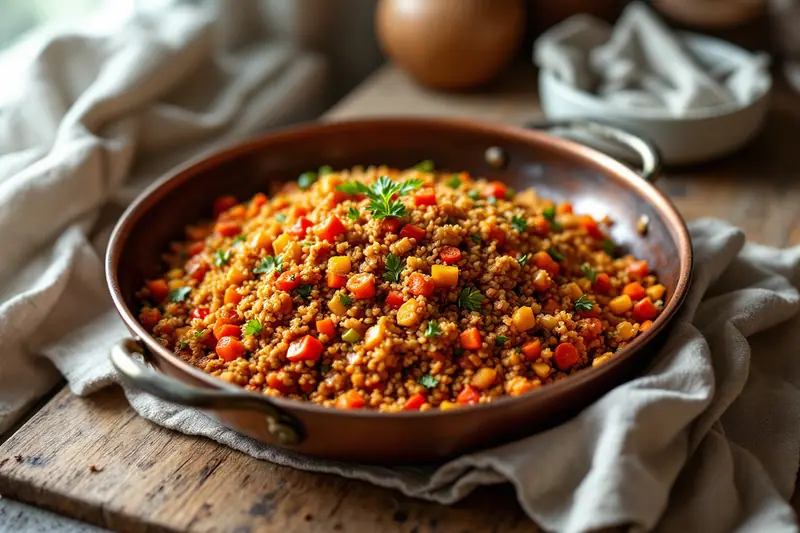
In my mother's kitchen in Gaziantep, the pan of bulgur pilaf was never the main event. It sat at the edge of the table next to a bowl of yogurt and whatever stew was on, and everyone took more of it than of the stew. Sebzeli bulgur pilavı, vegetable bulgur pilaf, is the version I make most in December, when peppers are still in the shops, carrots are sweet and cheap, and I want something warm and red on the plate without much effort.
What makes this one work is not a secret ingredient. It is three plain habits: frying the paste properly so it loses its raw edge, measuring the liquid against the bulgur rather than guessing, and leaving the pan alone under a towel at the end. Do those three things and the grains come out separate, chewy and glossy. Skip them and you get a sticky, sour mass that tastes of tin.
Which bulgur to buy
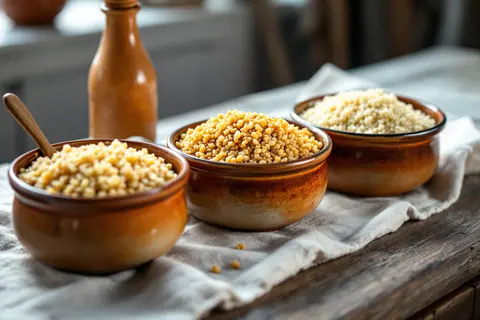
You want coarse bulgur, the kind sold for pilaf (pilavlık bulgur). The grains are roughly the size of a lentil split in half. Fine bulgur, the sort used for kısır and köfte, will turn to porridge here, so leave it in the cupboard for another day. If you can find the very large whole-kernel type, başbaşı bulgur, it also works, but it needs a few minutes longer and a little more water. There is more on the differences in the notes on how to cook bulgur.
Do not wash coarse bulgur. It has already been boiled, dried and cracked before it reaches you, and rinsing only adds water you cannot measure. Pick it over for any small stones if it comes loose from a market sack, and that is all.
The vegetables, and how small to cut them
I use one green pepper, one red pepper and one carrot, all cut into dice about the size of a chickpea. Smaller than that and they vanish; larger and they sit on top of the grain like a separate salad. The carrot goes in first because it takes longest. The peppers follow and only need to soften at the edges. An onion is not optional. Chop it finely and let it go soft and pale gold before anything else touches the pan.
You can swap in other vegetables as the season allows. In summer I add a small courgette (zucchini), diced and salted for ten minutes first so it does not water down the pan. In winter a handful of frozen peas thrown in with the liquid is fine. What I would not add is anything starchy like potato, which competes with the bulgur and makes the whole dish heavy.
Frying the paste
Tomato paste and Turkish red pepper paste (biber salçası) are both here, one tablespoon each. Put them into the oil after the vegetables have softened and stir them over a medium heat for a full two minutes. You will see the colour go from bright red to a deeper brick colour, and the smell changes from sharp to sweet. This is the step people rush. Raw paste gives the pilaf a sour, metallic note, and no amount of salt at the end will hide it. If you are new to it, the notes on Turkish pepper paste explain the mild and hot kinds.
Then the bulgur goes in. Stir it through the paste for another minute or two, until every grain is coated and you can hear a faint crackle. This toasting seals the outside of the grain a little and is one reason the finished pilaf stays loose.
Getting the water right
My rule for coarse pilaf bulgur is 1 3/4 cups of liquid to 1 cup of bulgur when there are tomatoes in the pan, and 2 cups to 1 cup when there are none. Fresh grated tomato brings its own juice, so it counts towards the total in a rough way. The liquid must be hot when it goes in. Cold water stops the cooking, and the grains on the bottom start to catch while the top is still dry.
Here is how that plays out for different numbers of people. These are cup measures (240 ml) for coarse pilaf bulgur with two grated tomatoes per two cups of grain:
| People | Coarse bulgur | Hot water or stock | Pan size |
|---|---|---|---|
| 3 | 1 cup (170 g) | 1 3/4 cups (420 ml) | 20 cm |
| 6 | 2 cups (340 g) | 3 1/2 cups (840 ml) | 24 cm |
| 10 | 3 1/2 cups (595 g) | 6 cups (1.4 litres) | 30 cm, wide |
For a crowd, use a wider pan rather than a deeper one. A deep pot of bulgur cooks unevenly: the bottom layer turns soft while the top layer stays firm. If you scale up, add the salt in proportion too, roughly one level teaspoon per cup of dry bulgur, then taste the liquid before it goes in. It should taste pleasantly salty, like a good soup.
The towel rest
Once the liquid has been absorbed, about 15 minutes on the lowest heat, turn the heat off. Lift the lid, lay a clean tea towel over the pan, and put the lid back on top so the towel is pressed between them. Then leave it for 15 minutes. Do not stir and do not peek.
The towel catches the steam that would otherwise condense on the lid and drip back onto the grain. Without it, the top layer goes wet and clumpy. With it, the bulgur finishes cooking in its own heat and dries just enough at the surface. When you lift the lid you should see small holes all over the top, like tiny chimneys. That is how I know the pilaf is done properly. Fluff it with a fork from the edges inwards.
Recipe
Sebzeli bulgur pilavı (vegetable bulgur pilaf)
Serves 6 as a side, 4 as a main with yogurt
- Prep
- 15 min
- Cook
- 25 min
- Rest
- 15 min
- Total
- 55 min
Pilaf
- 3 tbsp45 ml olive oil or sunflower oil
- 1 tbsp15 g butter
- 1 medium1 medium onion, finely chopped
- 1 medium1 medium carrot, cut into small dice
- 11 green bell pepper or 2 long green peppers, diced
- 11 red bell pepper, diced
- 1 tbsp15 g tomato paste
- 1 tbsp15 g mild Turkish red pepper paste (biber salçası)
- 2 medium2 medium ripe tomatoes, grated, skins discarded
- 2 cups340 g coarse pilaf bulgur (pilavlık bulgur)
- 3 1/2 cups840 ml hot water or vegetable stock
- 1 1/2 tsp8 g salt (less if the stock is salted)
- 1/2 tsp1 g black pepper
- 1 tsp1 g dried mint
Method
- Warm the oil and butter in a 24 cm heavy pan over a medium heat, add the onion and cook for 6 to 7 minutes until soft and pale gold.
- Add the carrot and cook for 3 minutes, then add both peppers and cook for 3 minutes more, until their edges soften.
- Stir in the tomato paste and pepper paste and fry for 2 minutes, stirring, until they darken to a brick red and smell sweet.
- Add the grated tomatoes and cook for 2 to 3 minutes until the mixture looks jammy and most of the juice has gone.
- Tip in the bulgur and stir for 1 to 2 minutes until every grain is coated and you hear a light crackle.
- Pour in the hot water or stock, add the salt, black pepper and mint, and stir once.
- Bring to the boil, then cover, turn the heat to its lowest setting and cook for 15 minutes, until small holes appear on the surface and no liquid shows when you tilt the pan.
- Turn off the heat, lay a clean tea towel over the pan, replace the lid on top and leave for 15 minutes without lifting it.
- Fluff the pilaf with a fork from the edges inwards and taste for salt before serving.
Cook's notes
- If the pilaf is still firm after the rest, sprinkle over 2 tbsp of boiling water, cover with the towel and lid again and wait 5 minutes.
- For 10 people use 3 1/2 cups (595 g) bulgur and 6 cups (1.4 litres) liquid in a wide 30 cm pan.
When it goes wrong
Too wet
You added the liquid cold, or the heat was too high and the bottom caught before the top could absorb. Next time, keep the water hot and the flame low. To rescue it now, take the lid off and leave the pan on the lowest heat for three or four minutes, then do the towel rest again.
Hard in the middle
The pan lost steam, usually because someone lifted the lid. Sprinkle a couple of tablespoons of boiling water over the top, cover with the towel and lid, and wait five minutes.
Bland
Almost always undersalted liquid. Bulgur takes a lot of salt. A squeeze of lemon and a pinch of pul biber (Turkish red pepper flakes) at the table will help.
Serving it
This pilaf stands up next to anything with a sauce: a bean stew, a meatball dish, a tray of roast chicken. On its own it makes a decent supper with a big spoonful of thick yogurt and a plate of pickles or a sharp onion and sumac salad. In Gaziantep we often ate it with cacık, yogurt thinned with water, grated cucumber and dried mint, which cools the pepper paste nicely.
If you like this, try the mushroom bulgur pilaf, which uses the same method with a darker, earthier flavour.
Storing and reheating
Cooled pilaf keeps for three days in a covered box in the fridge. To reheat, put it in a pan with a tablespoon of water and a small piece of butter, cover, and warm it over a low heat for five or six minutes, stirring once. The microwave works too: sprinkle the bulgur with water first and cover the bowl. Cold leftovers are good the next day mixed with chopped parsley, spring onion and a little lemon, almost like a rough salad, which is how my father liked to eat it for lunch.
Filed under Grains & Pulses

Ayla grew up in a Gaziantep family kitchen where bulgur came in four sizes and köfte was kneaded by feel. She lives in Bristol and writes about pilafs, kısır, köfte and the pepper pastes that hold them together.