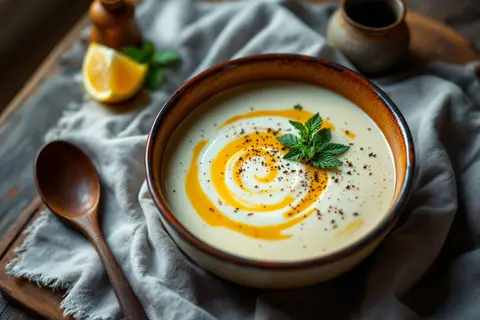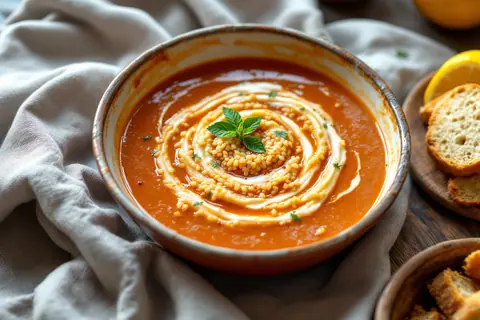

Tarhana soup: the Turkish winter soup made from a dried pantry mix

In my mother's house in Kayseri there was always a cloth bag of tarhana hanging in the pantry from autumn until spring. When the weather turned and nobody had time to cook, she would take two spoonfuls of the crumbly orange powder, soak it in a cup of water, and twenty minutes later there was soup on the table. Tangy, smooth, warming, and made from almost nothing. I still keep a jar of it in my kitchen in Frankfurt, and it is the soup I make most often between November and March.
Tarhana soup (tarhana çorbası) is not well known outside Turkey, partly because the main ingredient is something you either make yourself or buy from a Turkish grocer. This piece explains what tarhana actually is, how it is made at home, what to look for when you buy it, and how to cook the soup so it comes out silky rather than lumpy.
What tarhana is
Tarhana is a dried, fermented mixture of flour, yogurt and cooked vegetables. The usual vegetables are tomatoes, red peppers and onions, often with pepper paste and dried mint. Everything is mixed into a soft dough and left for several days to sour and bubble, rather like a sourdough starter. The dough is then broken into pieces, dried in the sun or a warm room, and rubbed through a sieve into a coarse powder. Fully dried, it keeps for months without a fridge.
That is the whole point of it. Tarhana is a way of putting late-summer tomatoes, peppers and the summer's yogurt into a form that survives the winter. Each region and each family has its own version. Some use cracked wheat instead of flour and dry it in chunks; some add chickpeas or lentils; in a few areas the dried sheets are eaten as a snack rather than made into soup. The powdered kind is the one most people mean, and it is what this recipe uses.
The flavour is sour from the fermentation and the yogurt, savoury from the vegetables, a little sweet from the cooked tomato. Once you have tasted it, you will recognise it anywhere.
Homemade tarhana: what the work involves
Making tarhana is a late-summer job, and it takes about a week, though most of that is waiting. I make it every other year, in a large batch, and it lasts two winters in an airtight jar. Here is the outline, so you know what you are taking on.
Cook roughly 1 kg of chopped ripe tomatoes, 3 red peppers and 2 onions together until soft and thick, about 30 minutes. Blend them smooth and let them cool. Stir in 500 g of plain yogurt, 2 tablespoons of red pepper paste, a handful of dried mint and a tablespoon of salt. Then work in plain flour, a little at a time, until you have a soft, sticky dough that holds its shape; it usually takes 1 to 1.2 kg. Cover the bowl with a cloth and leave it somewhere warm.
Every day for five to seven days, knead it down with wet hands. It will rise, smell pleasantly sour and develop small bubbles. When it smells clean and tangy rather than yeasty, pinch it into walnut-sized pieces onto clean cloths and dry them in a warm, airy place, turning them each day. After two or three days, when the outside is dry but the centre still yields, rub the pieces through a coarse sieve. Spread the crumbs out again and let them dry until they feel like dry sand, another few days. Only then does it go into jars. Any moisture left in it will turn the batch mouldy.
It is a lot of steps, but each one is short, and the smell of the kitchen on drying days is reason enough.
Buying tarhana
Most Turkish and Middle Eastern grocers sell tarhana in bags, sometimes labelled with the town it comes from. Look for these signs of a good one:
- Colour: a deep orange or brick red, not pale beige. Pale tarhana is mostly flour.
- Smell: open the bag at home and it should smell sour and of tomato and pepper. A flat, dusty smell means it is old.
- Texture: coarse crumbs with some small lumps are normal. A very fine, uniform powder often thickens well but tastes of less.
Bought tarhana varies a lot in salt. Always taste the soup before you add any.
Getting the thickness right
Tarhana soup should coat a spoon lightly and pour like single cream. Too thin and it tastes weak; too thick and it sets into porridge as it cools. The amount depends on your tarhana, but this is my starting ratio, worked out for a powdered tarhana of average strength:
| Tarhana | Liquid | Result |
|---|---|---|
| 1 tbsp (about 12 g) | 250 ml | Thin, brothy, a light starter |
| 1 1/2 tbsp (about 18 g) | 250 ml | My usual: pourable, coats the spoon |
| 2 tbsp (about 24 g) | 250 ml | Thick and hearty, a meal in itself |
For four bowls, that means about 7 tablespoons of tarhana for 1.25 litres of liquid, counting the cup of water you soak it in. To cook for six, multiply by one and a half: about 10 tablespoons and just under 2 litres in all. Write your own numbers on the jar once you have found them, because the next batch of the same tarhana will behave the same way. The soup thickens as it stands, so a pot reheated the next day needs a splash of hot water.
Avoiding lumps
Tarhana contains flour, and flour dropped into hot liquid forms lumps. The answer is to soak it first. Put the tarhana in a bowl with a cup of cold water, stir and leave it for 15 minutes. The crumbs soften and the mixture turns into a thick orange paste. Whisk it smooth before it goes into the pan.
Then add the soaked tarhana to the pan while the liquid is still warm rather than boiling, and whisk as it comes up to a simmer. Once it has thickened you can switch to a wooden spoon, but stir often, scraping the bottom, because it catches easily.
Recipe
Tarhana çorbası (tarhana soup)
Serves 4
- Prep
- 5 min
- Cook
- 20 min
- Rest
- 15 min
- Total
- 40 min
Soup
- 7 tbsp85 g dried powdered tarhana
- 1 cup240 ml cold water, for soaking
- 2 tbsp30 g butter or olive oil
- 1 tbsp15 g tomato paste
- 1 tsp5 g Turkish red pepper paste (biber salçası)
- 4 cups1 litre hot vegetable or chicken stock, or water
- to tasteto taste salt
To finish
- 1 tbsp15 g butter
- 1 tsp1 g dried mint
- 1/2 tsp1 g pul biber (Turkish chilli flakes)
Method
- Put the tarhana in a bowl with the cold water, stir and leave for 15 minutes until it has softened into a thick paste, then whisk smooth.
- Melt the butter in a medium pan over medium heat, add the tomato paste and pepper paste and stir for 1 minute until they smell sweet and darken slightly.
- Pour in the hot stock, stir to dissolve the pastes, and let it cool for a minute so it is hot but not bubbling.
- Whisk in the soaked tarhana paste until there are no lumps.
- Bring to a gentle simmer over medium heat, whisking, until the soup thickens, about 5 minutes.
- Lower the heat and simmer for 10 to 12 minutes more, stirring often and scraping the bottom, until it coats a spoon and tastes cooked rather than floury.
- Taste, then add salt only if it needs it, and thin with a little hot water if it is too thick.
- Melt the butter for finishing in a small pan, take it off the heat and stir in the mint and pul biber, then spoon it over each bowl.
Cook's notes
- Leftover soup thickens in the fridge; loosen it with hot water as you reheat it.
- A squeeze of lemon at the table suits a mild, less sour tarhana.
Additions that stretch the pot
Plain tarhana soup is how I like it most, but it is also a good base for using things up. A handful of cooked chickpeas makes it more filling. A spoonful of fine bulgur added with the stock thickens it and gives it some body; give it the full 15 minutes so the grains soften. Some cooks in central Anatolia add small pieces of dried meat or a few spoonfuls of minced lamb browned with the pastes. In my house, the most common addition is a few leftover cubes of yesterday's bread, toasted in the oven and dropped into the bowl at the table.
What to serve with it
Tarhana soup is a winter breakfast in many homes, eaten with bread, and it is just as good as a light supper. If you are building a soup week, it sits well beside red lentil soup and ezogelin soup, which share a similar base of butter, paste and dried mint but taste quite different. Serve it with good bread, a few pickles or a plate of olives and cheese.
Storing tarhana and the soup
Keep dried tarhana in a jar or a cloth bag in a cool, dry cupboard. Homemade tarhana that is properly dry keeps for a year or more; bought tarhana is best within the date on the bag. If it ever smells musty or shows any sign of damp, throw it away.
The cooked soup keeps for three days in the fridge. It does not freeze well; the texture goes grainy when thawed. As it costs so little and takes twenty minutes, I simply make it fresh.
Cook's questions
Can I use tarhana that has formed hard lumps in the jar?
Yes, as long as it smells right. Crush the lumps with a rolling pin before soaking, or soak it for 30 minutes instead of 15 and whisk hard.
My soup tastes floury. What went wrong?
It needs more time. Tarhana soup should simmer for at least 15 minutes after it thickens. Keep the heat low and keep stirring.
Is tarhana vegetarian?
Most powdered tarhana is made only from flour, yogurt, vegetables and spices, so it is vegetarian, though not vegan because of the yogurt. Use vegetable stock and butter or oil, and the soup is vegetarian too.
What can I use instead of pepper paste?
A little extra tomato paste and a pinch of sweet paprika. The pepper paste guide explains what the real thing adds, if you want to keep a jar in the fridge.
Filed under Soups

Nuray comes from Kayseri and now lives in Frankfurt. She writes about soups, beans, lentils and slow winter stews, with an eye on what a pantry can stretch to across a busy week.