
How to cook dried chickpeas: soaking, timings and yields
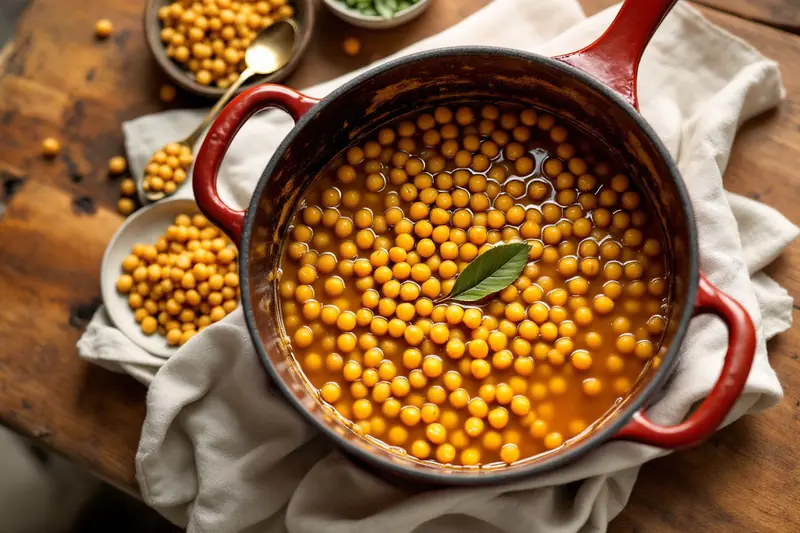
My grandmother on the Black Sea coast kept chickpeas soaking in a big enamel bowl on the back of the counter more or less permanently through the winter. Nohut went into stews with lamb, into pilafs, into soups, and into the bowl of aşure that took most of a day. She never measured anything, and her chickpeas were always soft, creamy right through and still whole. Mine, the first few times I tried in my flat in Rotterdam, were either hard in the middle after two hours or split into a grey mash.
So I did what I usually do and cooked them side by side: soaked and unsoaked, with and without baking soda, on the hob and in a pressure cooker, with old chickpeas and fresh ones. This guide is the result. It covers everything from the dry bag to the freezer, and once you have it down, a tin of chickpeas will start to taste a little tinny.
Why bother cooking them yourself
Home-cooked chickpeas are creamier and taste more of themselves. You control the salt, you can cook them exactly as soft as a dish needs (firm for salads, very soft for stews and dips), and you get the cooking liquid, which is a good base for soup. Dried chickpeas are also much cheaper per portion than tinned, and they take up less room in the cupboard. The only real cost is planning a day ahead.
Step one: buy fresh dried chickpeas
This sounds odd, since dried chickpeas look the same for years. They do not cook the same. As dried pulses age, their skins and cell walls toughen, and very old chickpeas can simmer for three hours and still be chalky. In my side-by-side test, a bag that had sat at the back of my cupboard for a long time, well past its date, took nearly twice as long as a newly bought bag and never went fully creamy.
Buy them from a shop that sells a lot of them, such as a Turkish or Middle Eastern grocer, and use them within a year. Look for even colour, few broken pieces and no dust in the bottom of the bag. Large chickpeas are good for stews and salads; smaller ones cook a little faster and are fine for dips.
Step two: soak them
Soaking is not strictly required, but it shortens cooking time a lot and helps the chickpeas cook evenly, so the outside does not fall apart before the inside softens.
Put the chickpeas in a large bowl and cover them with at least three times their volume of cold water. They will roughly double in size, and any that poke out above the water will stay hard. Leave them for 8 to 12 hours, or overnight. In a warm kitchen, put the bowl in the fridge so they do not start to ferment.
If you forgot, use a quick soak: bring the chickpeas to the boil in plenty of water, boil for two minutes, then turn off the heat, cover and leave for an hour. It is not quite as good as an overnight soak, but it is close.
Salt in the soak
Add a tablespoon of salt per litre of soaking water. This seasons the chickpeas all the way through and, in my tests, gave noticeably softer skins. The old belief that salt makes pulses tough did not hold up in my kitchen at all. Rinse them after soaking.
Baking soda, and how much
A small amount of baking soda (bicarbonate of soda) in the soaking water makes the water slightly alkaline, which helps break down the skins and softens the chickpeas faster. Use 1 teaspoon per cup (about 200 g) of dried chickpeas. This was the single biggest difference in my test: soda-soaked chickpeas were tender a good 20 to 30 minutes sooner and noticeably creamier.
Do not overdo it. Too much soda gives a soapy taste and turns the chickpeas mushy on the outside. And always rinse after soaking with soda, then cook in fresh water. If your water is very hard, add another 1/4 teaspoon of soda to the cooking water too, because the minerals in hard water slow softening.
Step three: cook them
On the hob
Drain and rinse the soaked chickpeas and put them in a heavy pot. Cover with fresh cold water by about 5 cm, add a bay leaf and half an onion if you like, and bring to the boil. A grey foam will rise in the first ten minutes; skim it off with a spoon. Then lower the heat until the water is barely trembling, partly cover the pot and cook for 60 to 90 minutes. Top up with hot water if the level falls below the chickpeas.
A gentle simmer matters more than you would think. Hard boiling bashes the chickpeas against each other and against the pot, so the skins split and the outsides break down while the centres are still firm.
In a pressure cooker
Drain and rinse the soaked chickpeas, put them in the pressure cooker and add water to cover by about 5 cm, plus a tablespoon of oil to calm the foam. Never fill the pot more than half full with pulses and water, because the foam can block the valve. Bring to high pressure and cook for 12 to 15 minutes, then let the pressure release naturally for about 15 minutes before opening.
Unsoaked chickpeas can go straight into the pressure cooker: allow 40 to 45 minutes at high pressure, plus natural release. They are good, though in my test slightly less even than soaked ones.
When are they done?
Take three chickpeas out, let them cool for a minute and squash each one between your tongue and the roof of your mouth. It should give way completely, creamy all the way to the centre, with no chalky or grainy core. Test three, not one, because they never cook quite evenly. For salads you want them just tender and holding their shape; for stews and dips, cook them until they crush with the slightest pressure.
Add salt to the cooking water from the start if you did not brine them, about 1 teaspoon per litre. Leave acids out until the chickpeas are tender. Tomato, lemon, vinegar and pomegranate molasses all slow softening, which is why a stew like chickpeas with lamb uses chickpeas that are already cooked or nearly cooked before the tomato goes in.
The recipe: a pot of home-cooked chickpeas
This is the basic batch I cook most weekends. It gives enough for two dishes for four people, or one dish and a freezer bag.
Recipe
Home-cooked chickpeas from dried (haşlanmış nohut)
About 1 kg cooked chickpeas, roughly 6 cups
- Prep
- 10 min
- Cook
- 1 hr 30 min
- Rest
- 12 hr
- Total
- 13 hr 40 min
Soaking
- 2 cups400 g dried chickpeas
- 10 cups2.4 litres cold water
- 2 tsp10 g baking soda (bicarbonate of soda)
- 2 tbsp30 g salt
Cooking
- 8 cups2 litres fresh cold water, plus more as needed
- 11 bay leaf
- 1/21/2 onion, peeled, optional
- 1 tbsp15 ml olive oil
- 1 tsp5 g salt, only if the soak was unsalted
Method
- Tip the chickpeas onto a tray and pick out any stones, shrivelled or discoloured ones.
- Put them in a large bowl with the cold water, baking soda and salt, stir to dissolve, and leave for 8 to 12 hours; refrigerate the bowl if the kitchen is warm.
- Drain the chickpeas into a colander and rinse them well under cold running water.
- Put them in a large heavy pot with the fresh water, bay leaf, onion and olive oil. The water should cover them by about 5 cm.
- Bring to the boil over high heat and skim off the grey foam that rises during the first 10 minutes.
- Lower the heat to a bare simmer, partly cover and cook for 60 to 90 minutes, topping up with hot water so the chickpeas stay covered.
- From 50 minutes, test three chickpeas at a time; they are done when each crushes creamy to the centre with no chalky core.
- Take the pot off the heat, remove the bay leaf and onion, and let the chickpeas cool in their liquid for at least 20 minutes so the skins settle.
- Use straight away, or store in the fridge or freezer with a little of the cooking liquid.
Cook's notes
- In a pressure cooker, cook the soaked chickpeas for 12 to 15 minutes at high pressure and let the pressure release naturally.
- Keep the cooking liquid: it makes a good base for soups and stews.
Yields and swaps
Dried chickpeas a little more than double in weight when cooked. These are the conversions I use, rounded for the kitchen.
| Dried | Cooked weight | Cooked volume | Roughly equal to |
|---|---|---|---|
| 1/2 cup (100 g) | 220 to 250 g | 1 1/4 to 1 1/2 cups | One 400 g tin, drained |
| 1 cup (200 g) | 450 to 500 g | 2 1/2 to 3 cups | Two tins, drained |
| 2 cups (400 g) | 900 g to 1 kg | 5 to 6 cups | Four tins, drained |
| 500 g bag | 1.1 to 1.25 kg | 6 1/2 to 7 cups | Five tins, drained |
As a worked example: a recipe for a bulgur pilaf with chickpeas that calls for one tin of drained chickpeas needs about 100 g, or 1/2 cup, of dried chickpeas cooked from scratch. If the recipe asks for 1 1/2 cups of cooked chickpeas, use a generous 1/2 cup dried. When in doubt, cook a little more; leftovers freeze.
Peeling chickpeas
You do not need to peel chickpeas for stews, pilafs or soups. You may want to for a very smooth dip, or for dishes where loose skins would look untidy.
The easy way: after cooking, while they are still warm, tip a few handfuls into a large bowl of cold water and rub them firmly between your palms. The skins slip off and float to the top. Tilt the bowl and pour the skins off over the sink, top up with water and repeat. Chickpeas soaked with baking soda shed their skins much more easily, so if you know you will be peeling, use the soda.
The other way is to spread the chickpeas between two clean tea towels and roll them gently under your hands, then pick out the peeled ones. Slower, but less wet.
Freezing and storing
Cooked chickpeas keep in the fridge for four to five days, covered with a little of their cooking liquid so they do not dry out.
They freeze very well. I portion them into bags of about 240 g, the drained weight of a standard tin, so I can swap one bag for one tin in any recipe. Add a few spoonfuls of cooking liquid to each bag, press out the air and freeze flat for up to three months. For loose chickpeas that you can pour out by the handful, spread drained chickpeas on a tray, freeze for two hours, then tip them into a bag.
Thaw them overnight in the fridge, or drop the frozen chickpeas straight into a simmering stew or soup for the last 15 minutes of cooking. For salads, thaw them first and pat them dry.
When chickpeas go wrong
Still hard after two hours
Almost always old chickpeas or very hard water. Add 1/4 teaspoon of baking soda to the pot and keep simmering. If they are still hard after another 30 minutes, they are probably too old to ever soften; use them in a purée or soup and buy a fresh bag.
Split and falling apart
The water boiled too hard, or there was too much baking soda. Keep the simmer gentle and stick to the measures above.
Hard after going into a tomato sauce
They went in undercooked, and the acid stopped them softening. Cook chickpeas fully tender before they meet tomato, lemon or vinegar.
Bland
Not enough salt in the soak or the cooking water. Salting from the start seasons them through; salt sprinkled on at the end only seasons the outside.
Where to use them
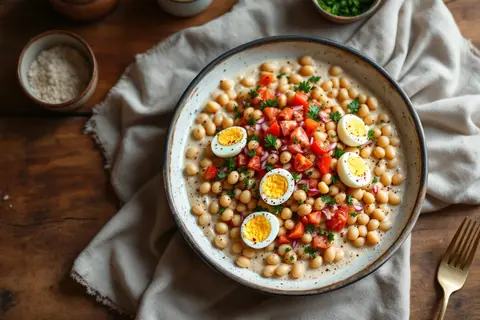
A pot of cooked chickpeas is a week of good food. They go into stews with lamb or vegetables, into pilafs and grain salads, into soups with the cooking liquid as the base, and into the slow-cooked wheat and fruit pudding aşure, where they sit happily next to white beans and apricots. My weekend pot usually becomes one stew on Sunday, a pilaf on Tuesday, and a bag in the freezer with the date written on it in marker.
Filed under Grains & Pulses, Kitchen Notes

Murat's family is from the Black Sea coast; he lives in Rotterdam. He likes to test things side by side: soaking times, oven temperatures, bread doughs, chickpeas cooked five ways, and the weeknight plans that come out of it.