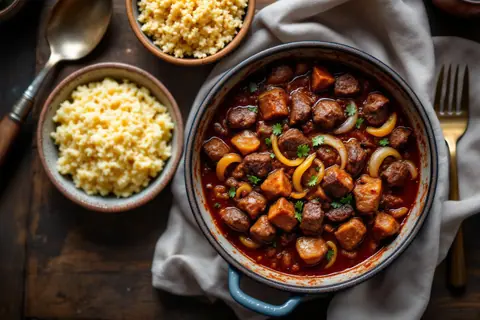

Etli nohut: Turkish chickpea and lamb stew, slow and simple
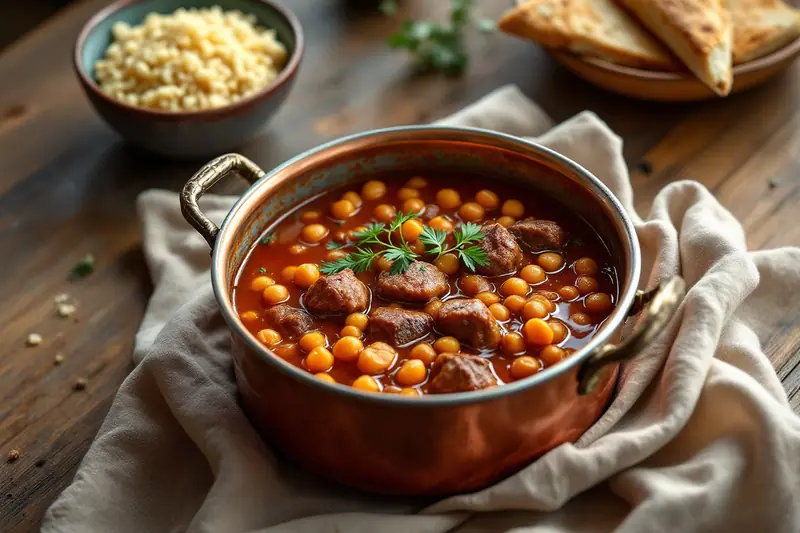
When the first cold week arrives in Frankfurt, I soak chickpeas on a Saturday night without really deciding to. By Sunday lunch there is a pot of etli nohut on the stove, and the kitchen smells the way my mother's did in Kayseri from November to March. Etli nohut means simply "chickpeas with meat": a stew of dried chickpeas, cubes of lamb or beef, onion and paste, cooked until the chickpeas are soft right through and the broth has turned a deep, slightly glossy red.
It is not a fancy dish and it was never meant to be. A small piece of meat goes a long way here, because the chickpeas do most of the filling and the meat does most of the flavouring. Five hundred grams of lamb shoulder feeds six people generously. Served with bulgur pilaf, pickles and bread, it is a full winter meal for a family on a modest budget.
What makes a good pot is not a secret ingredient. It is three small decisions: how you treat the chickpeas, how you brown the meat, and how long you let the two cook together.
Start with dried chickpeas
Tinned chickpeas will make something edible, but they will not make etli nohut. Dried chickpeas cooked from scratch absorb the broth and keep a creamy centre with a skin that holds together, while tinned ones go grainy and start to fall apart in a long simmer. They also cost less, which matters in a dish that is eaten often.
Soak them overnight in plenty of cold water, at least three times their volume, because they double in size. Twelve hours is ideal. If your kitchen is warm, put the bowl in the fridge so the soaking water does not start to ferment. In the morning, drain them, rinse, and give them a head start in fresh water before they meet the meat. I explain the whole soaking and simmering routine in more detail in the guide to cooking dried chickpeas, including how to tell old chickpeas from fresh ones.
Some cooks add a pinch of bicarbonate of soda to the soaking water when the chickpeas are old and stubborn. I only do this if I know a bag has been in the cupboard for a long time. A quarter teaspoon is plenty, and you must rinse well afterwards or the stew will taste soapy.
Why precook them?
Lamb shoulder in small cubes becomes tender in roughly an hour of gentle simmering. Soaked chickpeas often need longer, sometimes much longer. If you put both in the pot raw at the same time, you either get tender meat with hard chickpeas or chickpeas that are perfect and meat that has turned stringy. Giving the chickpeas 45 minutes on their own lets them finish at the same moment as the lamb.
Browning meat the Kayseri way
My mother never added oil to the pot before the meat. She put the cubes into a dry, heavy pan over medium heat, covered it, and waited. Within a few minutes the meat releases its own liquid. You keep the lid on and let the cubes cook gently in that liquid for about 15 minutes, then take the lid off and let it bubble away. Once the pan is dry, you add butter and let the meat brown properly in the fat.
This method has a real advantage. The meat starts to soften in its own juices before it ever sees hot fat, so it never tightens up, and the caramelised juices left on the base of the pan become the backbone of the broth. It is slower than searing in a hot pan, but it needs almost no attention.
Use lamb shoulder or neck, or beef chuck. Cut it into pieces about 2.5 cm (1 inch) across. Smaller pieces disappear into the stew; bigger ones take too long. Leave some of the fat on.
Pepper paste, tomato paste, or both
The colour of etli nohut comes from paste. In Kayseri we use a spoonful of each: tomato paste for body and a little sweetness, and red pepper paste (biber salçası) for depth and a soft warmth. If you only have one, use the pepper paste. Mild or hot is up to you; I use the mild one and add pul biber (Turkish red pepper flakes) at the table for anyone who wants heat. There is a longer explanation of the different kinds in the piece on Turkish pepper paste.
Fry the paste in the butter with the onions for two minutes before adding water. It should darken slightly and smell sweet rather than raw. This step is small and it changes the whole pot.
How thick should the broth be?
Etli nohut is a stew with broth, not a soup and not a dry braise. When you tilt the pot, the liquid should come about two-thirds of the way up the chickpeas. A ladle should bring up chickpeas and meat with enough broth to soak into pilaf or bread. If it is too thin at the end, simmer uncovered for 10 minutes. If it is too thick, add a splash of hot water. Never add cold water to a pot of simmering chickpeas; the skins can toughen.
Salt goes in for the last half hour, once the chickpeas have softened. Salt added too early does not ruin them, but in my experience it slows them down.
A Sunday timing plan
Here is how I fit the pot around a 1 o'clock lunch, after soaking the chickpeas the night before:
| Time | What happens |
|---|---|
| 10:15 | Drain and rinse chickpeas, cover with fresh water, bring to the boil |
| 10:20 | Lamb into a dry pot, lid on |
| 10:35 | Lid off, let the juices reduce |
| 10:50 | Butter in, brown the meat, then onions |
| 11:00 | Pastes in, fry 2 minutes; drained chickpeas and hot water in |
| 12:30 | Salt, check the chickpeas and the broth |
| 12:45 | Heat off, rest with the lid on |
| 13:00 | Serve |
Bulgur pilaf takes about 30 minutes, so start it at 12:20 and it will be ready with the stew.
Recipe
Etli nohut (chickpea and lamb stew)
Serves 6 with pilaf and bread
- Prep
- 20 min
- Cook
- 2 hr 30 min
- Rest
- 12 hr
- Total
- 14 hr 50 min
Stew
- 1 1/4 cups250 g dried chickpeas, soaked overnight
- 1.1 lb500 g boneless lamb shoulder or beef chuck, in 2.5 cm (1 inch) cubes
- 2 tbsp30 g butter
- 1 tbsp15 ml sunflower or olive oil
- 2 medium2 medium onions, chopped
- 1 tbsp15 g tomato paste
- 1 tbsp15 g Turkish red pepper paste (biber salçası)
- 5 cups1.2 litres hot water
- 1 1/2 tsp1 1/2 tsp salt, or to taste
- 1/2 tsp1/2 tsp black pepper
- 1 tsp1 tsp pul biber (red pepper flakes), optional
Method
- Soak the chickpeas overnight in at least three times their volume of cold water.
- Drain and rinse the chickpeas, cover with fresh water in a pan, bring to the boil, skim the foam and simmer for 45 minutes.
- Meanwhile put the meat into a dry heavy pot over medium heat, cover and cook for 15 minutes until it has released its juices.
- Uncover and let the juices bubble away for about 15 minutes until the pot is almost dry.
- Add the butter and oil and brown the meat for 5 minutes, turning, until the edges are golden.
- Add the onions and cook for 8 minutes until soft and lightly coloured.
- Stir in the tomato paste and pepper paste and fry for 2 minutes until they darken and smell sweet.
- Drain the chickpeas and add them with the hot water; bring to the boil, then cover and simmer gently for 75 to 90 minutes.
- Add the salt, black pepper and pul biber and simmer for 15 minutes more, uncovered if the broth needs to thicken.
- Check that a chickpea crushes easily against the roof of your mouth and the lamb breaks with a spoon, then turn off the heat and rest for 10 minutes before serving.
Cook's notes
- In a pressure cooker, cook the browned meat, soaked chickpeas and water together for 25 minutes at high pressure, then add salt and simmer 10 minutes.
- The stew is better the next day; add a splash of hot water when reheating.
Variations
Beef instead of lamb
Chuck or shin works well. Shin needs 20 to 30 minutes longer, so give the chickpeas less time on their own.
With bones
A lamb neck bone or two added with the water makes the broth richer. Lift them out before serving and pick off any meat.
Meatless
Leave out the meat, start with the onions in butter and olive oil, and add a diced green pepper. It becomes a different, lighter dish, but a good one for the end of the month.
With potato
Some families add a peeled potato, cut into large chunks, for the last 30 minutes. It stretches the pot further and thickens the broth slightly.
Storing and reheating
Etli nohut keeps for three days in the fridge in a covered container and improves overnight as the chickpeas take in the broth. You will need to add a little hot water when reheating, about half a glass for a pot this size, because the chickpeas drink up the liquid as they sit. It also freezes well for up to three months. Thaw it overnight in the fridge and reheat gently.
What to serve with it
The classic partner is bulgur pilaf. In our house it was always bulgur pilaf with chickpeas on lighter days and plain buttered bulgur on days when the stew already had plenty of chickpeas. White rice pilaf is just as common in many homes. On the side: a bowl of plain yogurt or cacık, turşu (pickled cabbage, peppers or cucumbers), a raw onion salad with sumac, and bread for the broth. Spoon the stew over the pilaf in a shallow bowl, so the grains catch the red juices, and put the pickles where everyone can reach them.
Filed under Mains, Grains & Pulses

Nuray comes from Kayseri and now lives in Frankfurt. She writes about soups, beans, lentils and slow winter stews, with an eye on what a pantry can stretch to across a busy week.