
İmam bayıldı: Turkish stuffed aubergines slow-cooked in olive oil
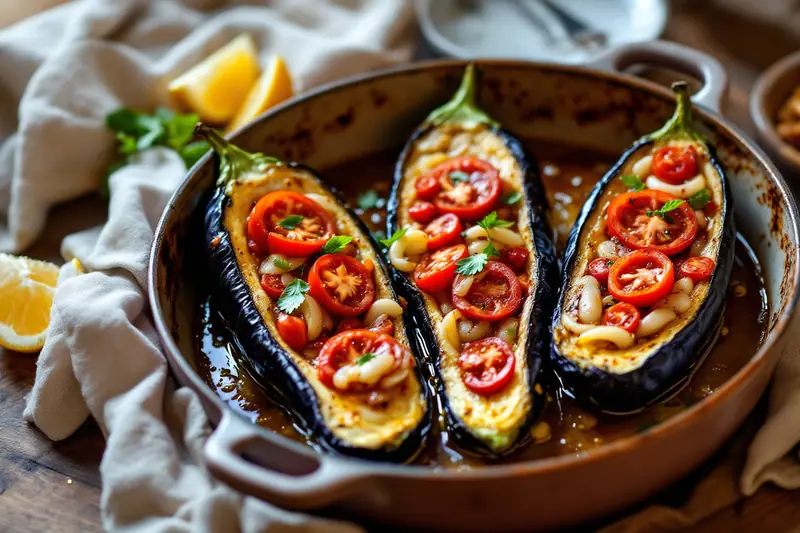
The first imam bayıldı of my summer is decided at the market, never in the kitchen. In Lisbon the long, slim aubergines (eggplant) start turning up on the stalls in early July, glossy and tight-skinned, and the moment I see them I know what the weekend holds. I buy more than I need, carry them home in a bag that bangs against my knees, and by Sunday there is a pan of them cooling on the stove with a tea towel over the top.
İmam bayıldı is whole aubergines, softened in oil, split open and filled with a heap of slow-cooked onion, garlic and tomato, then braised gently until everything collapses into one silky thing. It is served at room temperature, usually the day after it is made. There is no meat in it. That is the job of its cousin, karnıyarık, which looks almost the same but carries minced meat in the filling and is eaten hot. İmam bayıldı belongs to the zeytinyağlı family, the Turkish olive-oil dishes that are cooked slowly and eaten cool.
A name with a story
The name means "the imam fainted". There is a well-known tale behind it, told in several versions: an imam faints with pleasure on tasting the dish, or faints when he learns how much olive oil went into it. Nobody can tell you which version is right, and it does not matter much. What the story gets right is the oil. This is a generous dish, and the oil is part of the recipe, not a garnish.
Choosing the aubergines
For this dish you want slim aubergines, about 20 to 25 cm long and no thicker than a large cucumber. Each one should weigh roughly 150 to 200 g. The fat, round globe aubergines common in northern European supermarkets will work, but they take longer to soften, hold more seeds, and you end up cutting them in half, which makes a different dish.
Pick them up. A good one feels heavy for its size and the skin is tight and shiny, with no soft patches or brown bruising. The green cap should look fresh, not dried out. If you press the skin with your thumb, it should spring back slowly. A dent that stays means the aubergine is old and spongy inside, and old aubergines are the ones that taste bitter.
Keep the stems on. They hold the aubergine together through the long cook and make it easy to lift each one onto a plate.
Stripes, and why
Before anything else, peel the aubergines in long stripes from stem to tip, leaving a band of purple skin between each pale stripe. A vegetable peeler does it in a minute. This looks decorative, and it is, but it also has a purpose. Fully skinned, the aubergine falls apart in the pan. With all its skin, it stays tough and leathery in places and the oil cannot get in. The stripes give you both things: enough skin to hold the shape, enough bare flesh to drink in the sauce.
To salt or not
Older recipes tell you to salt aubergines to draw out bitterness. Modern slim aubergines are rarely bitter, but I still salt them, for a different reason. Salted aubergine soaks up less oil when you cook it, and the flesh turns creamy instead of greasy.
There are two ways. You can sprinkle the striped aubergines with salt and leave them for 30 minutes, then wipe them dry. Or you can do what my mother does in İzmir: drop them into a big bowl of cold water with two tablespoons of salt dissolved in it, put a plate on top to keep them under, and leave them for 20 minutes. Either way, dry them very well with a clean cloth before they meet hot oil. Wet aubergine and hot oil make a mess of your stove and your arms.
Frying or roasting
This is the real decision, and people feel strongly about it.
The traditional way is to fry the whole aubergines in a deep pan of olive oil, turning them until they are golden on all sides and soft enough to slump. Fried aubergines have a rich, slightly caramelised flavour and a melting texture that roasting does not quite match. But frying uses a lot of oil, much of which the aubergines absorb, and it splatters.
Roasting is gentler on you and on the kitchen. You brush the aubergines with oil and roast them at 220°C (425°F) for 25 to 30 minutes, turning once, until they are soft and wrinkled. The result is a little lighter and a little less luxurious, but still very good, and this is what I do most weekends.
| Frying | Roasting | |
|---|---|---|
| Oil for this stage | about 1 cup (240 ml), much of it absorbed | about 1/3 cup (80 ml), brushed on |
| Time | 10 to 12 minutes, in batches | 25 to 30 minutes, all at once |
| Flavour | deeper, sweeter, browner | cleaner, slightly smoky |
| Texture after braising | melting | soft but holds shape better |
| Mess | splatters | one tray to wash |
If you fry, do it over medium heat in two batches, so the oil stays hot and the aubergines brown rather than stew. Lift them onto a rack or paper to drain for a few minutes. The recipe below is written for roasting, with the frying option in the tips.
Whichever you choose, the test is the same. Press the middle of an aubergine with the back of a spoon: it should give completely, with no firm core. If it is still springy, it will stay that way in the pan.
The filling is mostly onion
A good imam bayıldı filling is far more onion than tomato. Three medium onions for six aubergines sounds like a lot until you see how far they cook down. Slice them into thin half moons and cook them slowly in olive oil over low heat for a good 15 minutes, until they are completely soft, sweet and pale gold. Do not let them brown hard. Browned onion tastes of the frying pan; slow onion tastes of summer.
Then the garlic goes in, plenty of it, sliced not crushed, along with a couple of long green peppers. In Turkey these would be sivri biber, thin and mild. In Lisbon I use the pale green frying peppers from the market, and in other places I have used Italian friggitelli or half a green bell pepper. A short cook, three minutes, is enough. Then grated fresh tomato, a teaspoon of sugar and salt, and a few minutes more until the mixture is thick and jammy. Off the heat, stir in a handful of chopped parsley.
Taste it now. It should be sweet and savoury, well salted, and a little bit oily. It goes on top of the aubergines and then cooks for another half hour, so it will mellow further.
How much oil
I use about 200 ml (a little over 3/4 cup) of olive oil in total for six aubergines when I roast them: some brushed on before roasting, the rest for the onions and the braising. If you fry, you will use more. You can cut it down, but each spoon you take away makes the dish drier and less like itself. Olive-oil dishes are cooked in oil the way stews are cooked in stock. The oil carries the onion flavour into the aubergine, and as the pan cools it becomes a sauce you will want to wipe up with bread.
Use a decent everyday extra virgin olive oil. A very peppery, expensive one can taste harsh after a long cook; save that for the table.
The slow braise
Lay the soft aubergines side by side in a wide pan with a lid, a sauté pan or shallow casserole that holds them snugly in one layer. Cut a deep slit along the top of each one, from just below the stem to about 2 cm from the tip, and use two spoons to open it into a boat. Sprinkle a little salt inside. Pack the filling in, heaped up, and lay a slice of tomato and a strip of green pepper on top of each. It looks plain at this stage. It will look beautiful in an hour.
Pour half a cup of hot water and the last of the oil around the aubergines, not over them, cover, and cook over the lowest heat for 35 to 40 minutes. The liquid should just tremble at the edges. When it is done, the tomato slices have slumped, the aubergine skin has gone dark and soft, and the liquid in the pan has reduced to a red oil with a little juice underneath.
Why it waits until tomorrow
You can eat imam bayıldı a few hours after cooking, once it has cooled. It is good. The next day it is much better. Overnight, the aubergine flesh takes in the oil and tomato juice from the filling, the garlic softens, and the whole dish settles into itself. The sharp edges go. Leave it in its pan, covered, until cool, then put it in the fridge. Take it out an hour before you eat, so the oil loosens and the flavours come back. Cold from the fridge, it tastes muted and the oil sets white.
The recipe
Recipe
İmam bayıldı (stuffed aubergines in olive oil)
Serves 6 as a main with bread, or 6 to 8 on a meze table
- Prep
- 45 min
- Cook
- 1 hr 20 min
- Rest
- 2 hr
- Total
- 4 hr 5 min
Aubergines
- 6 slim6 slim aubergines (eggplant), about 150 to 200 g each, stems on
- 2 tbsp30 g salt, for the soaking water
- 1/3 cup80 ml extra virgin olive oil, for brushing
Filling
- 1/3 cup80 ml extra virgin olive oil
- 3 medium3 medium onions, halved and thinly sliced
- 88 garlic cloves, thinly sliced
- 22 long green peppers, finely chopped
- 3 medium3 medium ripe tomatoes, grated, skins discarded (about 350 g pulp)
- 1 tsp4 g sugar
- 1 1/2 tsp8 g salt
- 1/2 cup15 g flat-leaf parsley, chopped
To finish
- 1 medium1 medium tomato, cut into 6 slices
- 11 long green pepper, cut into 6 strips
- 1/2 cup120 ml hot water
- 3 tbsp45 ml extra virgin olive oil
Method
- Peel the aubergines in long stripes from stem to tip, leaving bands of skin between, and soak them in cold water with the 2 tbsp salt for 20 minutes, weighed down with a plate.
- Heat the oven to 220°C (425°F), dry the aubergines very well, brush them all over with the oil and roast on a tray for 25 to 30 minutes, turning once, until soft right through when pressed.
- Meanwhile, warm the filling oil in a frying pan over low heat and cook the onions for 15 minutes, stirring often, until soft, sweet and pale gold.
- Add the garlic and chopped peppers and cook for 3 minutes, until the garlic smells sweet but has not browned.
- Stir in the grated tomato, sugar and salt and simmer for 5 minutes until thick and jammy, then take off the heat and stir in the parsley.
- Lay the roasted aubergines side by side in a wide lidded pan, cut a deep slit along each from below the stem to 2 cm from the tip, and open it into a pocket with two spoons.
- Salt the inside of each pocket lightly, pack in the filling, and top each with a tomato slice and a strip of pepper.
- Pour the hot water and the 3 tbsp oil around the aubergines, cover, and cook over the lowest heat for 35 to 40 minutes, until the tomato slices have slumped and the liquid has reduced to a red oil.
- Turn off the heat and leave the aubergines to cool in the covered pan for at least 2 hours, then refrigerate overnight if you can.
- Take the pan out of the fridge an hour before serving and lift the aubergines onto a dish with the oily juices spooned over.
Cook's notes
- To fry instead of roast, heat about 1 cup (240 ml) olive oil in a deep pan over medium heat and fry the dried aubergines in two batches for 10 to 12 minutes, turning, until golden and soft, then drain on a rack.
- Covered in the fridge, imam bayıldı keeps for 3 days, and the second day is the best.
A plan for a Saturday dinner
This is how I fit it around a working week when friends are coming on Saturday evening.
- Friday, 6.30 pm: stripe and soak the aubergines; slice the onions and garlic while they soak.
- Friday, 6.50 pm: dry and roast the aubergines; start the onions.
- Friday, 7.30 pm: fill the aubergines and start the braise.
- Friday, 8.10 pm: turn off the heat, cover with a tea towel, eat something else.
- Friday, 10.30 pm: into the fridge in the pan.
- Saturday, 6 pm: out of the fridge, onto the serving dish at 7.
For twelve people on a meze table, I double everything except the water. One cup of water across two pans is plenty, because twelve aubergines release more of their own juice.
Serving it
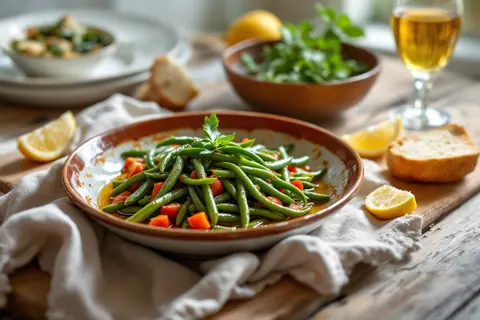
As a main course, give each person one whole aubergine with plenty of bread and a bowl of thick plain yogurt on the table. With a plate of rice pilaf it becomes a proper dinner. On a meze table, cut each aubergine in half crossways and set it next to something sharp and something creamy: acılı ezme and haydari are the obvious pair. If you are cooking a whole spread of olive-oil dishes, it sits happily beside green beans in olive oil, and the two can be made on the same evening, one pan each.
A squeeze of lemon at the table is welcome. Raw onion, chilli or anything hot is not; this is a soft, sweet dish, and it should stay that way.
Cook's questions
Can I use large round aubergines?
Yes, but halve them lengthwise, score the cut side, and roast them cut side down for 35 to 40 minutes. Fill the halves like boats and braise them as above, adding 10 minutes.
My aubergines are still firm after the braise. What happened?
They were not soft enough before they went into the pan. The braise finishes the aubergine; it does not cook it from raw. Next time roast or fry them a little longer, until they collapse when pressed.
Can I make it without tomato slices on top?
Of course. The slice keeps the filling moist and looks pretty, but a spoon of the filling tomato pulp on top does the same job.
Can I serve it warm?
You can, and some families do. The flavours are louder and less settled warm, and the oil seems heavier. Try it both ways once.
When the dish is empty, there is always a little red oil left with some onion in it. I keep that in a jar in the fridge and fry eggs in it the next morning.
Filed under Mains, Meze & Salads

Bora is from İzmir and cooks the Aegean way: olive oil, vegetables, herbs and a table full of mezes. He lives in Lisbon, shops at the market most mornings and writes about dolma, salads and dishes served at room temperature.