
Turkish pantry spices: pul biber, sumac, isot and more
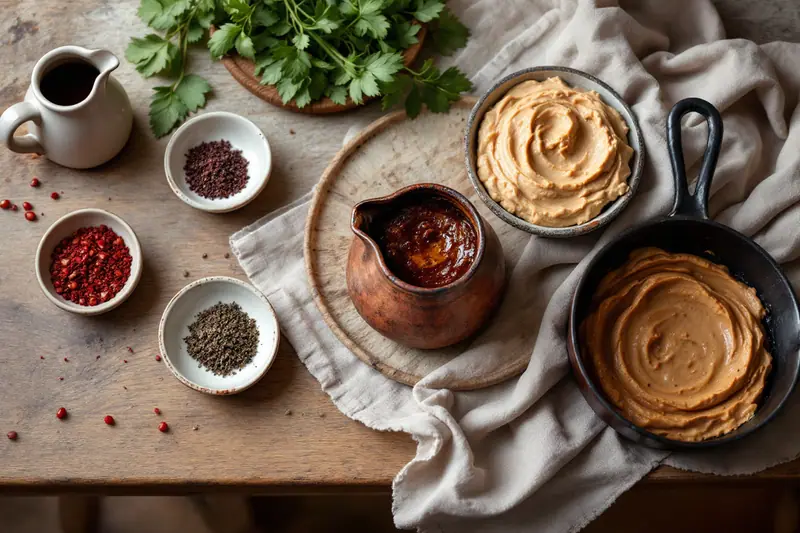
Open a cupboard in almost any Turkish kitchen and you will find the same short row of jars. There is a red flake, a darker and oilier flake, a purple powder, a bag of crumbled green leaves, two or three dark bottles and a tub of grey paste that needs a stir. That row does more work than any spice rack I have seen in a Dutch supermarket, and it is small enough to fit on one shelf. My mother kept hers above the stove on the Black Sea coast, which is exactly where you should not keep spices, and I will come to that.
This guide goes through the seven things I would buy first if I were setting up a Turkish pantry from nothing: pul biber, isot, sumac, dried mint, nar ekşisi, pekmez and tahini. For each one I explain what it tastes like, what it actually does in a dish, what to look for when you buy it and how to store it so it still tastes of something in three months. At the end there is a small recipe for pepper butter, which is the quickest way to understand why these flakes matter.
Think in jobs, not in spices
The mistake I made when I first cooked Turkish food away from home was to treat these jars as interchangeable "red stuff". They are not. It helps to sort them by the job they do in the pan or on the plate.
- Warmth and colour: pul biber and isot. Both are dried peppers. They add gentle heat, fruitiness and a red or rust colour that bleeds into oil.
- Sourness: sumac and nar ekşisi. Turkish cooks reach for these where others might use lemon or vinegar, often alongside them.
- Herbal lift: dried mint. It goes into soups, yogurt dishes, köfte and bean salads, and it is not a weaker copy of fresh mint.
- Sweet depth: pekmez, the fruit molasses, mostly grape.
- Richness: tahini, which binds dressings and pairs with pekmez at breakfast.
Once you see a recipe through these jobs, substitutions become easier. If a salad wants sourness and you have no sumac, a little lemon and a few drops of nar ekşisi will do the same job. If a soup wants warmth and you have no isot, pul biber will do, though the soup will taste brighter and less smoky.
The seven jars at a glance
| Ingredient | Turkish name | What it is | Flavour | Typical use | Keeps well for |
|---|---|---|---|---|---|
| Red pepper flakes | pul biber | Dried, coarsely crushed red peppers, often rubbed with oil and salt | Fruity, mild to medium heat | Eggs, soups, köfte, pepper butter | 6 months, longer in the fridge |
| Urfa pepper | isot | Dark peppers sun-dried, sweated and dried again | Smoky, raisin-like, slow heat | Çiğ köfte, kebab, lentil dishes | 6 months, fridge in summer |
| Sumac | sumak | Ground dried berries of the sumac shrub | Tart, lemony, a little fruity | Onion salads, grilled meat, piyaz | 6 to 12 months |
| Dried mint | kuru nane | Crumbled dried spearmint leaves | Cool, sweet, hay-like | Soups, yogurt, köfte, beans | 12 months |
| Pomegranate molasses | nar ekşisi | Pomegranate juice boiled down to a syrup | Sharp, fruity, lightly sweet | Kısır, salad dressings, glazes | 12 months after opening |
| Grape molasses | üzüm pekmezi | Grape juice reduced to a thick syrup | Deep, caramel-like sweetness | With tahini on bread, sweets | 12 months or more |
| Sesame paste | tahin | Ground roasted sesame seeds | Rich, nutty, slightly bitter | Dressings, hummus, halva, breakfast | 6 months after opening |
The storage times are my own rough guide from keeping notes on my jars. Colour and smell tell you more than any date.
Pul biber: the everyday flake
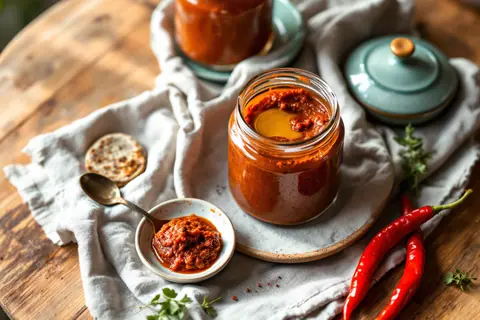
Pul biber is coarsely crushed dried red pepper. Good pul biber is bright brick red, slightly damp to the touch and clumps a little when you pinch it, because it has been rubbed with a touch of oil and salt after crushing. Cheaper flakes are dry, pale and dusty, with lots of yellow seed. Those taste of heat and not much else.
Heat varies. Some flakes are made from sweet peppers and are barely warm; others are properly hot. Taste a few flakes on their own before you cook with a new bag. I keep one mild and one hot and mix them depending on who is eating.
The thing that makes pul biber shine is fat. Stirred into hot butter or olive oil, the flakes give up their colour within seconds and turn the fat a glossy red. This is the finishing move for red lentil soup, for yogurt with garlic, for fried eggs and for many bean dishes. It also goes into pepper paste based dishes alongside biber salçası, the paste being the base note and the flakes the top note.
Isot: the dark one from Urfa
Isot comes from the area around Şanlıurfa in the south-east. The peppers are dried in the sun by day and wrapped up at night so they sweat, then dried again. That process turns them almost black-purple, oily and soft. The flavour is smoky and sweet, a bit like raisins and tobacco, and the heat builds slowly at the back of your mouth rather than hitting the tongue first.
It is the classic pepper for çiğ köfte, the raw bulgur köfte that is now usually made without meat, and it gives that dish its dark colour and slow warmth. It is also very good sprinkled over grilled aubergine (eggplant) or stirred into a lentil pilaf.
Because isot is oily, it can go stale and a little rancid in a warm kitchen. Keep it airtight and, in summer, in the fridge.
Sumac: sourness you can sprinkle
Sumac is a deep red powder ground from the dried berries of a shrub that grows wild across Anatolia. It tastes tart and lemony without the sharp edge of citrus, and it does not make a dish wet. That is its gift: you can add sourness to sliced onions, grilled meat or a bowl of rice without diluting anything.
The most common use is the onion salad that sits next to grilled meat: thinly sliced red onion rubbed with salt and a generous spoon of sumac, then mixed with parsley. The salt draws out the onion's harshness and the sumac stains it pink. This same onion goes into many versions of piyaz.
Look for sumac that is a dark wine red, not bright pinkish. Some sumac is sold with salt mixed in. That is fine, but taste first, because it changes how much salt you add elsewhere.
Dried mint: not a backup for fresh
Turkish cooks use dried mint on purpose. Drying changes spearmint: it loses the cool sharpness of the fresh leaf and gains a warmer, sweeter, almost hay-like smell. That smell is right for soups, bean dishes and anything with yogurt. Fresh mint in a yogurt soup tastes like a different dish.
To get the most from it, rub the leaves between your palms over the pan to crush them, or fry them for a few seconds in butter. When you open a jar and smell almost nothing, it is time for a new one. Good dried mint should smell clearly of mint the moment the lid comes off.
Nar ekşisi: the sour syrup
Nar ekşisi means "pomegranate sour", and that is the right way to think about it. Traditionally it is pomegranate juice boiled down until thick, with nothing added. It should taste sour first and fruity second, with only a little sweetness.
Many bottles on shop shelves are mostly sugar syrup with flavouring and colour. Read the ingredients list: you want pomegranate and perhaps a little salt, nothing else. The real thing costs more and lasts longer, because you use less.
Its most famous home is kısır, the bulgur salad, where it gives the sour backbone. It also goes into salad dressings with olive oil, into marinades for chicken and over roasted vegetables. Keep it in the cupboard after opening; a ring of crystals on the neck of the bottle is harmless.
Pekmez: fruit molasses
Pekmez is fruit juice cooked down to a thick, dark syrup. Grape is the most common, but you will find carob, mulberry and date as well. Grape pekmez tastes deep and caramel-like, less sweet than honey and slightly tangy.
The best way to meet it is at breakfast. Pour some tahini into a shallow dish, swirl pekmez into it, and mop it up with bread. The two together taste nutty, sweet and rich, a pairing called tahin pekmez. Pekmez also sweetens some winter puddings and is stirred into hot water or milk in cold weather.
Tahini: richer than you expect
Turkish tahini is usually made from well-roasted sesame, so it is darker and more strongly flavoured than some pale tahini sold abroad. It separates in the jar, with oil on top and a stiff paste below. Stir it thoroughly before each use, scraping right down to the bottom, or you will get thin oil one week and cement the next.
A useful trick: tahini thickens when you first add lemon juice or water, then loosens as you keep adding liquid. Do not panic when it seizes. Keep whisking in cold water a spoon at a time until it flows. This is how the dressing for Antalya-style piyaz is made.
A side-by-side test: does storage really matter?
I wanted to know how much the "keep peppers in the fridge" advice matters, so I split one fresh bag of pul biber into two jars. One went on the shelf next to the cooker, the other into the fridge door. After eight weeks I put them on white paper next to each other.
The fridge jar was still bright red and smelled of peppers. The shelf jar had turned a dull brown at the top, smelled of dust and needed nearly twice as much to give the same colour to a spoon of hot butter. Tested properly, that comes to 1 teaspoon from the fridge jar against about 2 teaspoons from the shelf jar for the same red oil.
The lesson for the whole pantry is simple:
- Keep spices away from heat, light and steam. The shelf above the cooker is the worst place in the kitchen.
- Buy small amounts, about 100 g of each flake at a time, unless you cook Turkish food every day.
- Put pul biber and isot in the fridge in warm weather, or all year if your kitchen is warm.
- Keep molasses and tahini in a cool cupboard with their lids tight.
- Smell everything every few months. If the smell has gone, so has the flavour.
Pepper butter (biberli tereyağı)
This is the small recipe that shows off two jars at once. You pour it over lentil soup, yogurt with garlic, fried eggs, boiled potatoes or plain bulgur pilaf. It takes four minutes and the only skill is not burning it.
Recipe
Biberli tereyağı (Turkish pepper and mint butter)
Enough to finish 4 bowls of soup or a large plate of yogurt
- Prep
- 2 min
- Cook
- 4 min
- Total
- 6 min
Butter
- 3 1/2 tbsp50 g unsalted butter
- 1 tbsp15 ml olive oil
- 1 1/2 tsp3 g pul biber (Turkish red pepper flakes)
- 1 tsp1 g dried mint
- 1 pinch1 pinch salt
Method
- Measure the pul biber and dried mint into a small bowl before you start, because the last step happens fast.
- Put the butter and olive oil in a small pan over medium heat; the oil helps stop the butter from burning.
- Heat until the butter melts and foams, about 2 minutes, swirling the pan now and then.
- When the foam starts to die down and the butter smells nutty, take the pan off the heat.
- Wait 10 seconds, then tip in the pul biber; the butter should hiss gently and turn red within a few seconds.
- Rub the dried mint between your palms over the pan, add the salt and swirl once more.
- Spoon over your soup, eggs or yogurt straight away while it is still hot and fragrant.
Cook's notes
- If the flakes turn dark brown or smell bitter, the butter was too hot; start again with the pan off the heat for longer.
- Swap half the pul biber for isot for a smokier butter.
A note on links: the box below points to a partner shop or service. If you buy or sign up through it, Duru Lezzetler may earn a commission at no extra cost to you. Partners never see or shape our recipes.
Cook's questions
Can I use chilli flakes instead of pul biber?
You can, but use less. Ordinary crushed chilli is hotter, drier and less fruity. Start with about a third of the amount and add sweet paprika for colour.
Is isot the same as Urfa pepper?
Yes. Isot is the local name for the pepper from the Urfa region, sold abroad as Urfa pepper or Urfa biber.
My tahini has gone hard at the bottom. Is it spoiled?
No, it has just separated. Scrape the hard paste into a bowl with the oil and stir hard, or blend for a few seconds. If it smells bitter or like old paint, it has gone rancid and should be replaced.
How much of each should I buy to start?
For a household that cooks Turkish food twice a week: 100 g each of pul biber, isot and sumac, a 30 g bag of dried mint, one bottle of nar ekşisi, one jar of pekmez and one jar of tahini. That lasts about two months, which is about how long the flakes stay at their best on a cool shelf.
Filed under Kitchen Notes

Murat's family is from the Black Sea coast; he lives in Rotterdam. He likes to test things side by side: soaking times, oven temperatures, bread doughs, chickpeas cooked five ways, and the weeknight plans that come out of it.