
Lahana sarması: Turkish cabbage rolls with mince and bulgur
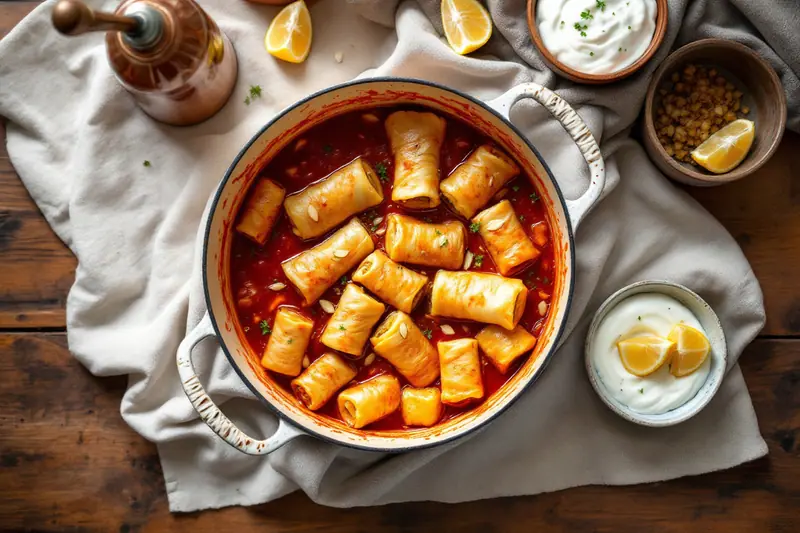
Lahana sarması is what my family made when the cabbages came in heavy and pale from the cold, and there were enough hands in the kitchen to roll forty of them before lunch. In Gaziantep we stuff them with a mix of mince, rice and coarse bulgur, plenty of pepper paste, and a lot of garlic laid between the layers. The rolls cook slowly in a tomato broth sharpened with lemon until the leaves are silky and the filling is tender, and then we eat them hot with a spoon of garlic yogurt on top.
It is not a quick dish. The cabbage needs softening, every leaf needs its rib trimmed, and the rolling takes as long as it takes. But nothing about it is difficult, and once you have a rhythm the rolling is calm work. This version makes enough for six, with leftovers that taste even better the next day.
Why bulgur goes in the filling
Most cabbage roll recipes around the region use only rice. Bulgur is the Gaziantep habit, and it is not just thrift. Coarse bulgur holds its shape in long cooking where rice can go soft, so the filling stays slightly nutty and separate. It also soaks up the meat juices and the paste, which gives the rolls a deeper colour inside. I use half rice, half bulgur: the rice binds, the bulgur gives texture.
Use coarse bulgur (the size used for pilaf), not fine bulgur, which turns pasty here. If you want to understand why the two grades behave so differently, the guide to cooking bulgur covers it well.
Both grains go in raw. They cook inside the leaves, absorbing the broth, and they swell as they do. This is the single most important thing to remember when you roll: roll firmly, but leave room for the filling to grow.
Softening the cabbage
You need a large white cabbage, around 1.5 kg, with loose, flexible outer leaves. Tightly packed, pointed cabbages are harder to peel. Savoy cabbage works but the crinkled leaves tear more easily.
There are two ways to soften the leaves, and I use both depending on the day.
Blanching
Cut deep around the core with a small knife and pull it out, leaving a cone-shaped hole. Bring a big pot of salted water to the boil and lower the whole cabbage in, hole side down. After 3 or 4 minutes, the outer leaves will loosen. Lift them off with tongs and a fork, one at a time, and lay them in a colander. Keep going, returning the cabbage to the water for a minute or two each time the next layer resists. When you reach leaves smaller than your palm, stop; chop the heart and use it to line the pot.
Freezing
If you plan a day ahead, put the whole cabbage in the freezer overnight, then let it thaw at room temperature for 6 to 8 hours. Freezing breaks the cell walls, and the thawed leaves are limp and easy to peel without any boiling. They are slightly more fragile, so handle them gently. I do this when I know I will be rolling on a Sunday morning.
Trimming and cutting the leaves
Every leaf has a thick central rib. Lay the leaf flat and shave the rib with a sharp knife until it is no thicker than the rest of the leaf. Do not cut it out entirely on small leaves, or the leaf will split.
Large outer leaves are too big for one roll. Cut them in half along the rib, removing the rib altogether, and you get two pieces. Keep all the trimmings: torn leaves, ribs and the chopped heart go into the bottom of the pot as a cushion so the rolls never touch the hot base.
Mix the filling properly
People rush this part, and it shows when you cut a roll open: streaks of pale rice in one place, a lump of paste in another. Put everything in a wide bowl and work it with your hands for a full two minutes, squeezing the mince through your fingers, the way you would knead köfte. You are not trying to make it smooth, only even. When every grain of rice is coated red and the onion juice has been absorbed, it is ready.
The quarter cup of water looks odd, but it matters. Raw grains need liquid to cook, and the broth only reaches the outside of the roll at first. A little water in the filling gets the centre going. Taste nothing raw, of course; instead, fry a teaspoon of the mixture in a small pan for a minute and check the salt and heat before you start rolling forty of them.
Rolling
Place a leaf piece in front of you with the cut or stem edge nearest you. Put a heaped tablespoon of filling near that edge and shape it into a little log, about the length of your finger. Fold the near edge over the filling, fold in both sides, then roll away from you. It should be firm, like a cigar, not packed hard. If you squeeze the filling tight, the swelling grains will split the leaf open as it cooks.
The rolls should all be roughly the same thickness, about two fingers wide, so they cook evenly. Size matters more than neatness. My aunt's were perfect, mine are tidy, and both taste the same.
A timing plan
Here is how an afternoon of lahana sarması actually runs, for about 40 rolls:
| Step | Time |
|---|---|
| Core and blanch the cabbage, trim the leaves | 25 minutes |
| Make the filling | 10 minutes |
| Roll | 35 to 45 minutes (20 with a helper) |
| Cook | 50 minutes |
| Rest in the pot | 15 minutes |
That is about two and a half hours from start to table, of which only the first hour and a bit is hands-on. Make the filling while the cabbage pot comes to the boil, and you save ten minutes.
Recipe
Lahana sarması (cabbage rolls with mince, rice and bulgur)
About 40 rolls, serves 6
- Prep
- 1 hr 15 min
- Cook
- 50 min
- Rest
- 15 min
- Total
- 2 hr 20 min
Cabbage
- 1 large1 large white cabbage, about 1.5 kg
Filling
- 10 oz300 g lamb or beef mince, not too lean
- 1/2 cup95 g medium-grain rice, rinsed and drained
- 1/2 cup85 g coarse bulgur
- 1 large1 large onion, grated
- 1 tbsp15 g Turkish red pepper paste (biber salçası)
- 1 tbsp15 g tomato paste
- 2 tbsp30 ml olive oil
- 1/2 cup15 g flat-leaf parsley, finely chopped
- 1 tsp1 g dried mint
- 1 tsp2 g pul biber (Turkish chilli flakes)
- 1 1/2 tsp8 g salt
- 1/2 tsp1 g black pepper
- 1/4 cup60 ml water
Broth
- 6 cloves6 cloves garlic, thinly sliced
- 1 tbsp15 g tomato paste
- 2 1/2 cups600 ml hot water
- 2 tbsp30 g butter or olive oil
- 11 lemon, juiced
To serve
- 1 1/2 cups350 g plain yogurt mixed with 1 crushed garlic clove and a pinch of salt
Method
- Cut out the cabbage core, lower the cabbage into a large pot of boiling salted water and peel off the leaves with tongs as they soften, 3 to 4 minutes per layer.
- Shave the thick rib of each leaf flat; cut large leaves in half along the rib and remove the rib.
- Mix all the filling ingredients in a bowl with your hands for 2 minutes until the paste is evenly spread and the mixture looks uniformly red.
- Line the base of a wide, heavy pot with the torn leaves, trimmed ribs and chopped cabbage heart.
- Put a heaped tablespoon of filling at the stem edge of each leaf, fold in the sides and roll up firmly, leaving a little room for the grains to swell.
- Pack the rolls seam side down in snug circles, scattering garlic slices between each layer.
- Whisk the tomato paste into the hot water with the butter and pour it over the rolls; it should come just to the top layer.
- Lay a heatproof plate upside down on the rolls to hold them in place, cover with the lid and bring to a boil over medium heat.
- Turn the heat to low and simmer for 50 minutes, until the leaves are soft and a roll cut open shows tender rice and bulgur.
- Pour the lemon juice over the rolls, take the pot off the heat and rest, covered, for 15 minutes.
- Serve hot with the garlic yogurt and some of the broth spooned over.
Cook's notes
- If the pot looks dry after 30 minutes, add 120 ml hot water around the edge.
- The rolls reheat well, covered, in a low oven or a pan with a splash of water.
Getting the broth right
The liquid should come just to the top of the rolls. Too much and the filling turns soggy; too little and the bottom layer catches. The plate on top matters more than people think. Without it, the rolls float and unroll as the broth simmers. Any heatproof plate a little smaller than the pot will do.
I add the lemon at the end, not the start. Acid slows down the softening of rice and cabbage, and lemon added early can leave the grains slightly firm even after an hour. Added after cooking, it stays bright and fresh. If you like them sourer, as many in the south-east do, add a tablespoon of pomegranate molasses to the broth as well. The pepper paste guide explains the difference between hot and sweet pastes if you want to adjust the heat.
A meat-free version
For a meat-free filling, replace the mince with another 1/2 cup of coarse bulgur, add a second grated onion, and increase the olive oil to 4 tablespoons. A handful of chopped walnuts gives back some of the richness. Cook exactly the same way, with olive oil instead of butter in the broth. These rolls are very good served at room temperature, like the olive-oil vine leaf sarma, with lemon wedges rather than yogurt.
Storing and reheating
Cooked rolls keep for three days in the fridge in their broth. The flavour deepens overnight, and the leaves turn even softer. Reheat gently, covered, with a splash of water. You can also freeze them, packed in a container with some broth: thaw in the fridge overnight and reheat slowly.
What to serve alongside
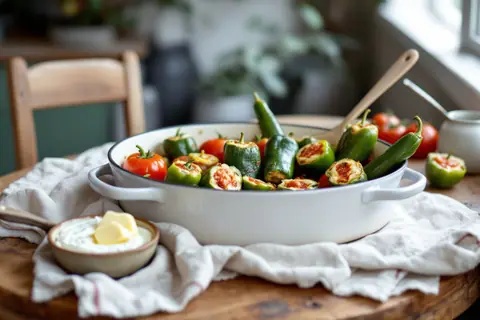
Lahana sarması is a full meal with the yogurt and a piece of bread. On a family table, it often sits beside other stuffed vegetables, and the stuffed vegetables dolma piece uses a similar filling if you want to fill peppers and courgettes (zucchini) with the leftovers. A sharp salad of shredded red cabbage or a few pickles cuts through the richness. Then a small glass of tea, and a very short walk.
Cook's questions
My rolls opened while cooking. Why?
Either they were rolled too loosely, they were not packed snugly enough, or there was no plate on top. Pack them so they support each other, seam side down, and weigh them down.
Can I use a different cabbage?
Pointed and savoy cabbages work but tear more easily, so make smaller rolls. In winter, Black Sea cooks use dark collard leaves for a similar dish; they need a longer blanch.
Can I make them ahead?
Yes. Roll them the day before, pack them into the pot, cover and refrigerate. Add the hot broth and cook as normal the next day, allowing 5 to 10 minutes more.
Filed under Mains

Ayla grew up in a Gaziantep family kitchen where bulgur came in four sizes and köfte was kneaded by feel. She lives in Bristol and writes about pilafs, kısır, köfte and the pepper pastes that hold them together.