
Zeytinyağlı yaprak sarma: vine leaves stuffed with rice
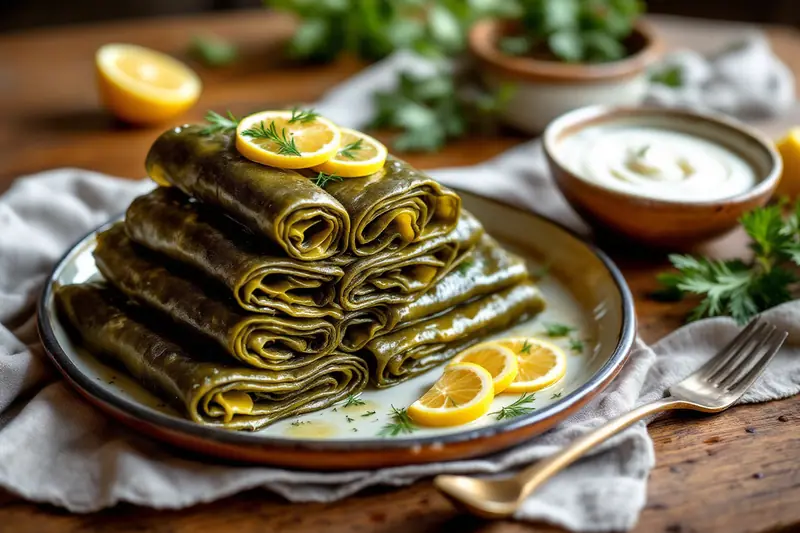
In İzmir, a plate of yaprak sarma is how you know someone has been cooking for you properly. Nobody rolls sixty vine leaves on a whim. My aunt would set up at the kitchen table after lunch with a radio, a bowl of filling, a stack of leaves and a pot, and by tea time the pot would be packed in tight spirals, ready for the stove.
This is the meatless kind, zeytinyağlı yaprak sarma: leaves wrapped around rice cooked with plenty of onion, pine nuts, currants and warm spices, then simmered in olive oil and lemon and eaten cool or at room temperature. ("Sarma" means wrapped; "dolma" means stuffed, and you will hear both words for the same dish depending on who is talking.) It keeps for days, it travels well to picnics, and once you have the rhythm of rolling it is one of the most relaxing things to make in a kitchen.
Brined leaves or fresh leaves
In late spring, when the vines are putting out new growth, Aegean markets sell fresh leaves in stacks tied with string. They are thin, pale and tender, and they make the most delicate sarma. Choose leaves about the size of your palm, without holes, from the younger growth near the tips of the branches.
- Fresh leaves: trim the stems, then drop them in batches of ten into a pan of boiling, lightly salted water for one to two minutes, until they turn olive green and go limp. Lift them out into cold water, then drain.
- Brined leaves: these come in jars or vacuum packs and are what most of us use most of the year. Unroll them carefully, put them in a large bowl of hot water for 15 minutes, then rinse under the tap. Taste a corner. If it is still very salty, soak again. Some jars hold thick, tough leaves; a quick two-minute blanch softens them.
Either way, snip off the stems and keep any torn or very large leaves aside. They line the pot.
The filling, half-cooked
Here is the one decision that shapes the whole dish: how much to cook the rice before rolling. Raw rice gives tight little rolls that can burst as the grains swell. Fully cooked rice makes a soft, mushy filling. The answer most İzmir cooks use is a half-cooked filling: the rice is fried in oil with the onions, then given a splash of water and simmered just until that water disappears. The grains are still firm in the middle, and they finish cooking inside the leaf.
Use a medium-grain rice that holds its shape. Rinse it in several changes of water until the water runs nearly clear, then soak it in warm water for 20 minutes while you chop the onions.
Onions are the backbone of the flavour, so do not be shy. Three medium onions for one and a half cups of rice sounds like a lot, but they cook down slowly in the olive oil until soft and sweet, never browned. The pine nuts are toasted in the same oil first until golden. The currants are small dried black grapes, sweeter and smaller than raisins; soak them in a little water so they plump up.
The spices are gentle: allspice, a little cinnamon, black pepper, dried mint, and a teaspoon of sugar to balance the lemon. Fresh dill and parsley go in at the end, off the heat. If you want more on the Aegean spice cupboard, see Turkish pantry spices.
How to roll
Lay a leaf flat on a board, shiny side down and veined side up, with the stem end towards you. Put a heaped teaspoon of filling near the base, shaped into a little log across the leaf, not a ball.
- Fold the bottom of the leaf up over the filling.
- Fold the left and right sides in towards the centre, so the edges are straight and parallel.
- Roll away from you, keeping it snug, until the tip of the leaf wraps around.
- Set it seam side down.
The finished roll should be about the thickness of your little finger and about 6 cm long. Tight enough that it does not unroll when you pick it up, loose enough that you can press it gently and feel a little give. Rice grows as it cooks, and a roll that is wound like a cigar will split open. The first ten will be clumsy. After twenty you will not look at your hands.
Packing and cooking
Line the base of a wide, heavy pot with the torn leaves. This stops the bottom layer catching. Arrange the rolls seam side down in tight concentric circles, then start a second layer on top, at an angle to the first. Tuck thin lemon slices between the layers.
Put a small heatproof plate upside down on top of the rolls to keep them from moving as the water bubbles. Pour over hot water mixed with olive oil and lemon juice, just enough to reach the plate. Bring to a gentle simmer, cover, and cook on low heat for about 45 minutes, until the rice is fully tender and the liquid has mostly been absorbed.
Then the most important step: leave them alone. Let the sarma cool completely in the pot with the lid on. They firm up as they cool and the leaves soak up the last of the oil.
A worked example: yield and timing
For planning, this is how the batch below breaks down:
| Item | Amount |
|---|---|
| Filling from 1 1/2 cups (285 g) rice | about 650 g, roughly 4 1/2 cups |
| Filling per roll | 1 heaped tsp, about 12 g |
| Rolls | about 50 to 55 |
| Leaves needed | 55 good leaves, plus 8 to 10 for lining |
| Rolling time | about 1 minute each for a beginner, 20 seconds once practised |
So a first-time roller should allow close to an hour of rolling, while an experienced hand finishes in about 20 minutes. Add 30 minutes for the filling and 45 for the cooking, then at least two hours of cooling. Start in the morning for dinner, or the day before.
Recipe
Zeytinyağlı yaprak sarma (vine leaves with rice, currants and pine nuts)
About 50 rolls, serves 8 as a meze
- Prep
- 1 hr 15 min
- Cook
- 50 min
- Rest
- 2 hr
- Total
- 4 hr 5 min
Leaves
- about 65about 65 brined or fresh vine leaves
Filling
- 1 1/2 cups285 g medium-grain rice, rinsed and soaked for 20 minutes
- 1/3 cup80 ml olive oil
- 3 medium3 medium onions, finely chopped
- 2 tbsp20 g pine nuts
- 2 tbsp20 g currants, soaked in warm water for 10 minutes
- 1 tsp1 tsp ground allspice
- 1/2 tsp1/2 tsp ground cinnamon
- 1/2 tsp1/2 tsp black pepper
- 1 tsp1 tsp dried mint
- 1 tsp4 g sugar
- 1 1/2 tsp9 g fine salt
- 3/4 cup180 ml hot water
- 1/2 bunch15 g dill, finely chopped
- 1/2 bunch15 g flat-leaf parsley, finely chopped
Cooking liquid
- 2 cups480 ml hot water
- 1/4 cup60 ml olive oil
- 3 tbsp45 ml lemon juice
- 11 lemon, thinly sliced
Method
- Soak brined leaves in hot water for 15 minutes, then rinse and taste for salt; blanch fresh leaves for 1 to 2 minutes and cool in cold water. Snip off the stems.
- Warm the olive oil in a wide pan over medium heat, add the pine nuts and stir for 2 to 3 minutes until golden.
- Add the onions and cook gently for 12 to 15 minutes, stirring often, until soft, translucent and sweet but not browned.
- Drain the rice, add it to the pan and stir for 3 minutes until the grains turn glossy and slightly translucent at the edges.
- Add the drained currants, spices, sugar, salt and 180 ml hot water. Cover and simmer on low for 6 to 8 minutes, until the water is absorbed and the rice is still firm in the centre.
- Take off the heat, stir in the dill and parsley and let the filling cool until you can handle it.
- Lay a leaf shiny side down, place a heaped teaspoon of filling as a short log near the stem end, fold up the base and sides and roll snugly away from you.
- Line a wide heavy pot with torn leaves, then pack the rolls seam side down in tight circles, tucking lemon slices between the layers.
- Set an upturned heatproof plate on top, pour over the hot water mixed with the olive oil and lemon juice, and bring to a gentle simmer.
- Cover and cook on low heat for 40 to 45 minutes, until a roll tested from the centre is tender all the way through and most of the liquid is absorbed.
- Turn off the heat and leave the sarma to cool completely in the covered pot, at least 2 hours, before lifting them out.
Cook's notes
- If the pot looks dry after 30 minutes but the rice is still firm, add a few tablespoons of hot water around the edge.
- Kept covered in the fridge, the rolls are good for 4 days. Bring them back to room temperature before serving so the olive oil softens.
When things go wrong
- Rolls burst open: they were rolled too tight, or the filling was too raw. Next time cook the filling a minute or two longer and roll with a little give.
- Rice still hard after cooking: the water level was too low or the heat too high, so the liquid evaporated before the rice cooked. Add a little hot water and cook 10 minutes more.
- Leaves tough and chewy: the brined leaves were thick. Blanch them before rolling next time.
- Bland: these need more salt and lemon than you think, because they are eaten cool. Squeeze over more lemon at the table.
Serving
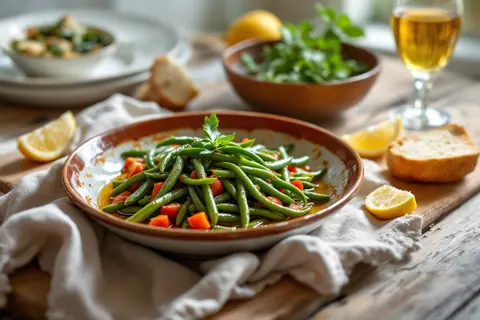
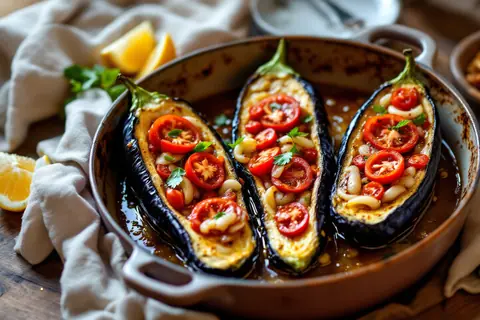
Sarma is a meze, so serve it as part of a spread: a bowl of thick yogurt with a little garlic, white cheese, olive-oil green beans, a salad. Lemon wedges on the side, always. If you enjoy rolling, the same filling goes into peppers and tomatoes too, and there is more on that in the guide to stuffed vegetables. Leftover filling, should you have any, is excellent spooned into a hollowed tomato with a spoonful of water in the dish and baked for 35 to 40 minutes at 180°C (350°F).
Filed under Meze & Salads

Bora is from İzmir and cooks the Aegean way: olive oil, vegetables, herbs and a table full of mezes. He lives in Lisbon, shops at the market most mornings and writes about dolma, salads and dishes served at room temperature.