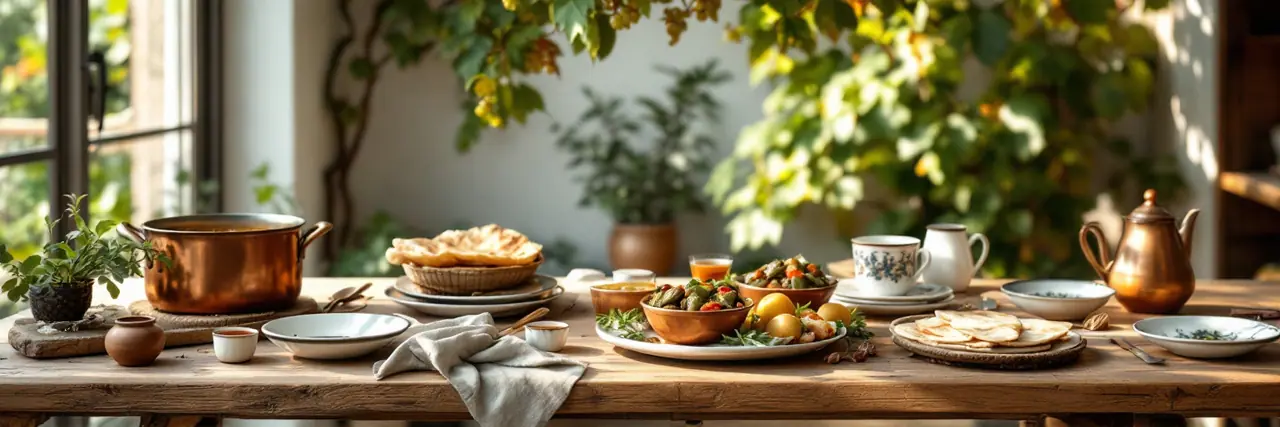

Aşure: Turkish Noah's pudding with wheat, beans and dried fruit
Aşure is the one pudding that is never made for one household. You cook a pot big enough to fill twenty bowls, keep a few, and carry the rest to your neighbours. In the Istanbul building where I grew up, the doorbell would ring all through the same week with bowls arriving from other flats, each one a little different: one heavy with apricots, one with orange zest, one so thick the spoon stood up. My mother kept score, quietly, of whose was best.
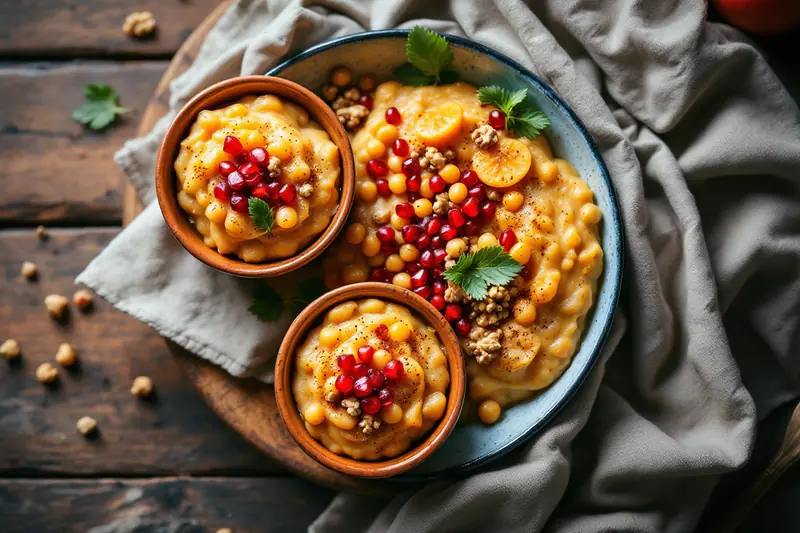
In English it is often called Noah's pudding. It is a sweet porridge of whole wheat, chickpeas and white beans, simmered until the wheat breaks open and thickens the liquid, then sweetened and loaded with dried fruit. It sounds strange to people who have never tasted it. Beans in a dessert? But once the beans have cooked down with the wheat and sugar, they taste nutty and soft, a bit like chestnuts. The texture is the point: chewy wheat, creamy pulses, sticky fruit, crunchy nuts on top.
The story and the season, plainly
Aşure belongs to Muharrem, the first month of the Islamic calendar, and particularly to its tenth day. Because that calendar follows the moon, the month moves about eleven days earlier each year, so aşure season slowly travels through the seasons. Some years it falls in autumn, some in high summer.
The story most people tell is that when the flood ended and the ark came to rest, Noah's family gathered what was left in the stores (a handful of this grain, a handful of those beans, some dried fruit) and cooked it all together in one pot. That is why aşure has so many ingredients, and why there is no single correct list. In Alevi households, aşure also closes the days of fasting kept in Muharrem, and it carries a deeper meaning there than a sweet dish. For most families, whatever their tradition, the practice is the same: cook a lot, and share it.
There is an old rule that you never return a borrowed bowl empty. When the aşure bowl goes back to your neighbour, it carries something of yours: a few biscuits, some fruit, your own aşure. You do not have to wait for Muharrem to make it, either. I make it in winter as well, simply because I love it.
Wheat: the base that thickens everything
The wheat is hulled whole wheat berries, sold in Turkish shops as aşurelik buğday. They are pale and plump. Do not use bulgur, which is already cooked and cracked and would turn to mush, and do not use pearled barley, which gives a slimier texture.
Soak the wheat overnight, then simmer it slowly in plenty of water. It takes a long time, between one and a half and two hours. You are waiting for most of the grains to split open and show their white insides, and for the water to turn cloudy and slightly thick, like a thin starch. That released starch is what turns the liquid into pudding. Stir from the bottom every 15 minutes or so, because wheat likes to stick.
Cook the pulses separately
The chickpeas and white beans go in their own pans. If you cook them in the wheat pot, the beans break apart and turn the pudding grey, and the chickpeas never quite soften once sugar is added. Cook each until tender but whole, drain, and add them near the end. Using drained tinned chickpeas and beans is acceptable when time is short; rinse them well.
Sugar: how much, and when
I am particular about sugar. Aşure should be sweet, but you should still taste the wheat. My rule is about 100 g of sugar for every litre of finished pudding. Add it only after the wheat has softened fully, because sugar firms up grains and legumes and stops them softening further.
Here is the ratio worked out for different pot sizes:
| Finished aşure | Dried wheat | Sugar | Small bowls (150 ml) |
|---|---|---|---|
| 1.5 litres | 90 g | 150 g | 10 |
| 3 litres | 185 g | 300 g | 20 |
| 4.5 litres | 280 g | 450 g | 30 |
The recipe below makes the middle row. Dried apricots and figs add their own sweetness, so if you add more fruit, take off two or three tablespoons of sugar. Taste after the sugar has dissolved and adjust then, not before.
Thickness: judge it hot, but think cold
Aşure sets considerably as it cools. When it is ready in the pot, it should pour from the ladle like a thick soup and coat the back of the spoon. If it already looks like porridge while hot, it will be stiff once chilled; add a ladle of hot water. If it runs like water, simmer for another 10 minutes. Lift a spoonful onto a cold saucer and wait a minute: it should hold a soft mound that slowly slumps at the edges.
Recipe
Aşure (Noah's pudding)
Makes about 3 litres, 20 small bowls
- Prep
- 30 min
- Cook
- 2 hr 30 min
- Rest
- 12 hr
- Total
- 15 hr
Pudding
- 1 cup185 g hulled whole wheat berries (aşurelik buğday)
- 1/2 cup100 g dried chickpeas
- 1/2 cup90 g dried white beans (cannellini or haricot)
- 10 cups2.4 litres water for the wheat, plus more as needed
- 1212 dried apricots, chopped
- 66 dried figs, stems removed, chopped
- 1/3 cup50 g sultanas
- 1 1/2 cups300 g granulated sugar
- 1 pinch1 pinch salt
- 11 orange, finely grated zest only
- 1 tbsp15 ml rose water, optional
To top
- 1/2 cup50 g walnuts, roughly chopped
- 1/4 cup35 g hazelnuts, toasted and chopped
- 1/21/2 pomegranate, seeds only
- 2 tsp2 tsp ground cinnamon
Method
- Soak the wheat, chickpeas and white beans overnight in three separate bowls of cold water.
- Drain the wheat, put it in a large heavy pot with the 2.4 litres of water, bring to the boil, then cover and simmer gently for 1 1/2 to 2 hours, stirring from the bottom every 15 minutes, until most grains have split and the liquid is cloudy and slightly thick.
- Meanwhile drain the chickpeas and beans and cook them in two separate pans of fresh water: about 60 to 75 minutes for the chickpeas and 45 to 60 minutes for the beans, until tender but whole; drain.
- Top up the wheat with hot water whenever the liquid drops below the level of the grains.
- Add the chickpeas, beans, apricots, figs and sultanas to the wheat and simmer for 15 minutes, stirring often.
- Add the sugar and salt, stir until dissolved and simmer for 10 minutes more, stirring constantly from the bottom so nothing catches.
- Check the thickness: it should pour from the ladle like a thick soup; add hot water or simmer longer as needed.
- Turn off the heat and stir in the orange zest and rose water.
- Ladle into small bowls, leave to cool to room temperature, then chill for at least 2 hours.
- Just before serving, top each bowl with walnuts, hazelnuts, pomegranate seeds and a dusting of cinnamon.
Cook's notes
- Aşure keeps for four days in the fridge; add the toppings only on the day you serve or give it.
- Toast the hazelnuts in a dry pan for 4 to 5 minutes, then rub off the loose skins in a tea towel.
Variations households argue about
Every family has its own list. Some add a handful of rice with the wheat for a creamier body. Some cook in a cinnamon stick and a few cloves and take them out before serving. Dried mulberries, chopped dates, currants and pine nuts all appear. On top you may find dried coconut, black sesame seeds, chopped pistachios or slivers of almond. In some homes the pulses change too: a few dried broad beans instead of white beans.
I would only say this: keep the wheat as the base and the sugar in proportion, and you cannot go far wrong.
Storing and sharing
Aşure keeps for four days, covered, in the fridge. Do not freeze it; the wheat turns grainy when thawed. If you are carrying it to neighbours, fill the bowls, cover each one with a plate or a sheet of foil, and add the toppings on top only when you hand them over, so the pomegranate does not bleed into the pudding and the nuts stay crisp.
When you want something lighter for a dessert table, serve aşure alongside a cold milk pudding such as sütlaç: one dense and fruity, one smooth and gentle. And if you enjoy a dessert that starts from the grain cupboard, there are more in sweets and puddings.
My mother's verdict on any bowl that came to our door was always about the wheat. If the grains were whole and hard, she said the cook had been in a hurry. If they had burst and gone soft and the pudding wobbled on the spoon, she nodded and put the bowl in the fridge for later.
Filed under Desserts, Seasonal Table

Defne grew up in Istanbul and bakes in Toronto. She writes about milk puddings, syrupy sweets, pastry and festive tables, and she is exact about sugar, temperatures and timing.