
Zeytinyağlı taze fasulye: green beans braised in olive oil
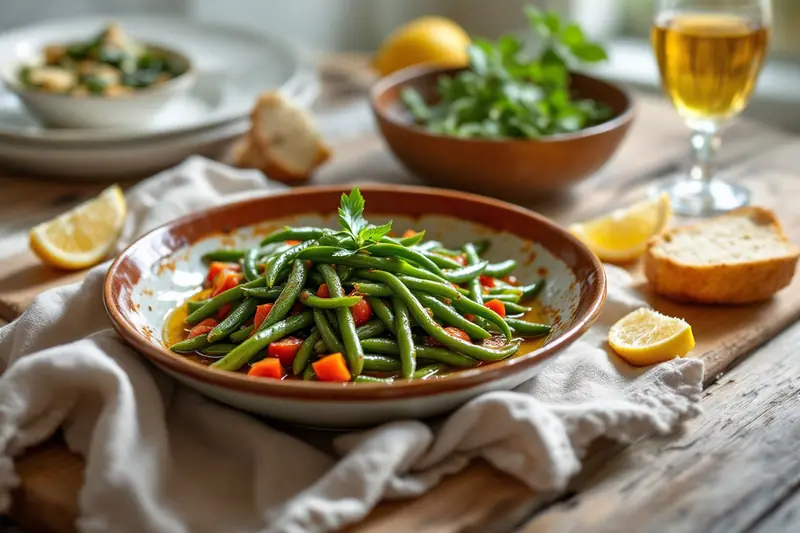
In İzmir, a summer lunch table nearly always has a dish of green beans sitting at room temperature, glossy with olive oil, soft enough to cut with a fork and stained orange from tomato. Nobody serves it hot. Nobody serves it crunchy. It is zeytinyağlı taze fasulye, "fresh beans with olive oil", and it belongs to a whole family of Turkish vegetable dishes cooked in olive oil and eaten cool.
If you grew up thinking green beans should be bright green and snap between your teeth, this dish asks you to forget that for an afternoon. The beans cook slowly with onion and tomato until they are completely tender and olive-coloured, and the sauce turns sweet and silky. Then you leave them in the pot to cool. The next day they are even better. I make a big pot whenever the market here in Lisbon has a good pile of flat beans, and it feeds us for three days.
The olive-oil family
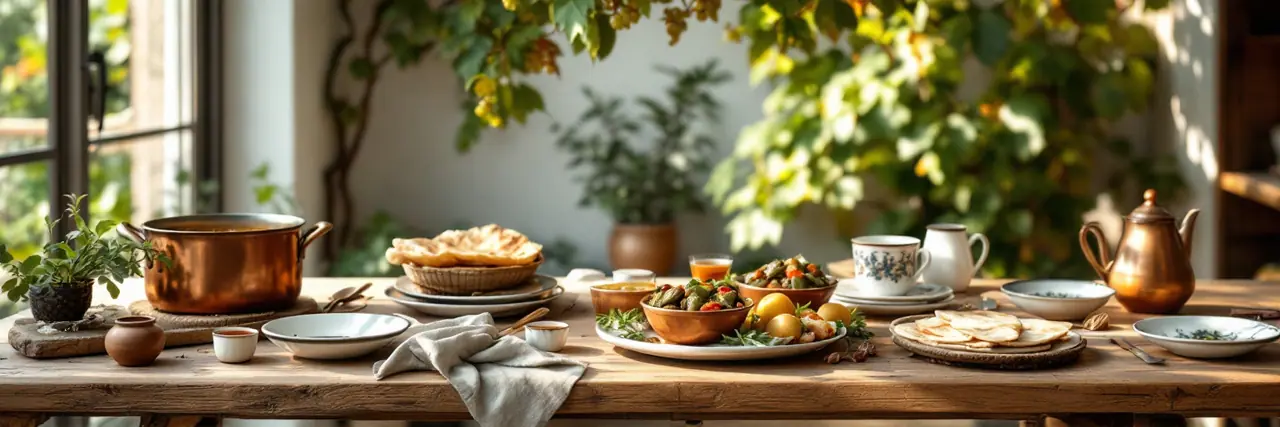
In Turkish kitchens there is a whole group of dishes simply called zeytinyağlılar, "the ones with olive oil". They follow a pattern: a vegetable is cooked gently in a generous amount of olive oil, usually with onion, often with tomato, a little sugar and salt, and very little water. There is no meat. They are served at room temperature or cool, often as a first course, as part of a meze spread, or as a light lunch with bread.
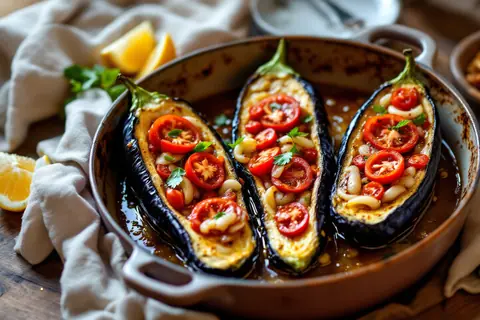
The family includes stuffed vine leaves (zeytinyağlı yaprak sarma), artichokes with dill, leeks with carrot and a little rice, celeriac with orange, borlotti beans in tomato, and the stuffed aubergine (eggplant) called imam bayıldı. Green beans are the simplest of them and the best place to start, because once you have the method, you can apply it to most of the others.
There are a few rules the whole family shares, and every one of them shows up in this recipe:
- The oil goes in at the start, not just as a drizzle at the end. It cooks with the vegetables and becomes the sauce.
- The heat stays low and the lid stays on, so the vegetables cook mostly in their own juices.
- A small amount of sugar balances the tomato and the natural bitterness of the oil.
- The dish cools in its pot, so the vegetables keep absorbing the sauce as the temperature drops.
- It is served cool with lemon, never piping hot.
Which beans to buy
The traditional bean is the wide, flat green bean, sometimes called a romano or Italian flat bean, often sold in Turkish markets under the name "Ayşe kadın". Runner beans work very well too, as long as you string them and slice them. Thin round French beans (string beans) can be used, but they cook faster and never become quite as silky, so reduce the time and accept a slightly firmer result.
Look for beans that bend before they snap, with no wrinkled or rusty patches. Very large, lumpy pods with fat beans inside will be stringy, however long you cook them.
To prepare them, top and tail each bean and pull away any string from both edges. On young flat beans there is often none. Then cut them into pieces about 4 to 5 cm (2 inches) long. Some cooks slice diagonally, some split each bean lengthwise first. My aunt in Bornova always split them, which gives thin ribbons that soak up more sauce. I usually just cut them across, which is quicker and still good.
Onion first, beans second
Start with the onion in the oil over low to medium heat, and give it a good 8 to 10 minutes. You want it soft and translucent, sweet, only lightly golden at the edges. Rushing this step leaves a raw, sharp taste in a dish that is meant to be mellow.
Then add the beans and stir them through the onion and oil. Cover the pot and let them sweat for about 10 minutes. They will darken and start to soften before the tomato goes in. This short sweat is what gives the beans their deep, almost buttery texture later on. If you put everything in at once, the beans tend to stay squeaky.
Tomato, sugar and water
Grate fresh ripe tomatoes on the large holes of a box grater, holding the cut side against the grater, and throw away the skins. You get a smooth pulp without peeling. In winter, use good tinned chopped tomatoes or passata, about the same weight. A spoon of tomato paste adds depth if the tomatoes are pale.
The sugar is not optional in the way many people assume. One teaspoon in a pot this size does not make the dish sweet. It rounds out the acidity of the tomato and stops the oil from tasting harsh. Taste the finished sauce with and without it once and you will see.
Add only a little hot water, half a cup at most. The beans release plenty of liquid as they cook. You want a thick, glossy sauce at the end, not a soup.
How long, and how to tell when they are done
This is where people who are used to quick-cooking green beans lose their nerve. Flat beans in this dish need 40 to 50 minutes at a gentle simmer after the tomato goes in. Round French beans need about 30.
Here is the texture check I use: lift out one piece of bean and press it against the side of the pot with a wooden spoon. When it is ready, it squashes easily without any squeak or fibrous resistance, and the colour has gone from bright green to a soft olive. The sauce should have reduced so that you can see oil shining on top, and when you tilt the pot, the liquid moves slowly, like loose jam. If there is still a lot of watery juice, take the lid off for the last 10 minutes.
How much oil
The recipe uses half a cup (120 ml) of olive oil for about 750 g of beans. That may look like a lot. It is the normal amount for this dish, and it is what makes it a zeytinyağlı and not just stewed beans. The oil carries the flavour of the onion and tomato into every bean and gives the sauce its body as it cools.
Use a good everyday extra virgin olive oil, not your most expensive peppery finishing oil, which can turn bitter during the long cook. You can cut the amount to a third of a cup if you must, but the dish will be thinner and less satisfying.
The recipe
Recipe
Zeytinyağlı taze fasulye (green beans braised in olive oil)
Serves 4 as a light lunch, 6 as part of a meze table
- Prep
- 20 min
- Cook
- 1 hr 5 min
- Rest
- 1 hr
- Total
- 2 hr 25 min
Beans
- 1/2 cup120 ml extra virgin olive oil
- 2 medium2 medium onions, halved and thinly sliced
- 1 2/3 lb750 g flat green beans (or runner beans), topped, tailed and cut into 4 to 5 cm pieces
- 3 large3 large ripe tomatoes, grated, skins discarded (about 400 g pulp)
- 1 tbsp15 g tomato paste (optional)
- 1 tsp4 g sugar
- 1 1/2 tsp8 g salt
- 1/2 cup120 ml hot water
To serve
- 11 lemon, cut into wedges
- 1 small bunch1 small bunch flat-leaf parsley or dill, chopped (optional)
Method
- Warm the olive oil in a wide, heavy pot over low to medium heat and add the onions.
- Cook the onions for 8 to 10 minutes, stirring now and then, until soft, translucent and only lightly golden at the edges.
- Add the beans and stir until every piece is coated in oil, then cover and cook for 10 minutes, stirring once, until they darken slightly.
- Stir in the grated tomato and the tomato paste, if using, and cook uncovered for 2 minutes.
- Add the sugar, salt and hot water, stir, and bring to a gentle simmer.
- Cover and cook on low heat for 40 to 50 minutes, stirring gently every 15 minutes, until a bean squashes easily against the pot and has turned olive green.
- If the sauce is still watery, uncover and simmer for 5 to 10 minutes more until oil shines on the surface.
- Turn off the heat and leave the beans to cool in the covered pot for at least an hour.
- Taste for salt, transfer to a serving dish and spoon the oily sauce over the top.
- Serve at room temperature with lemon wedges, bread and the herbs scattered over, if using.
Cook's notes
- The beans keep for 3 to 4 days in a covered container in the fridge; take them out 30 minutes before serving so the oil loosens.
- Add one peeled, diced potato with the beans for a more filling dish.
A timing plan for a summer lunch
Because this dish is served cool and improves overnight, it is ideal for cooking ahead. Here is how I plan it when friends are coming for a Sunday lunch at 1 pm and I want to cook for eight people, doubling the recipe in two pots or one very wide one:
- Saturday, 6 pm: top, tail and cut 1.5 kg of beans while listening to the radio, about 25 minutes.
- Saturday, 6.30 pm: start the onions in the cup of oil, then sweat the beans.
- Saturday, 6.50 pm: add tomatoes, sugar, salt and water. Simmer.
- Saturday, 7.40 pm: check texture, reduce if needed, switch off and leave covered.
- Saturday, 9 pm: once cool, cover and refrigerate.
- Sunday, 12 noon: take the pot out of the fridge so it reaches room temperature by 1 pm.
When doubling, do not double the water. A cup of water for 1.5 kg of beans is plenty, because the larger mass of beans releases more juice and evaporation is slower in a full pot.
What to serve it with
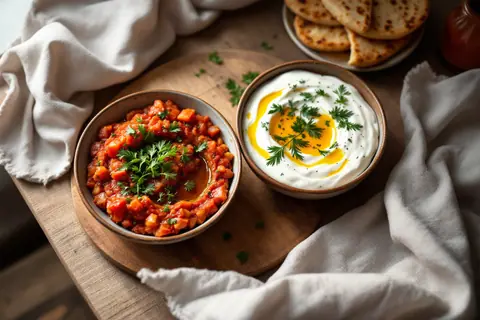
On its own with good bread and a bowl of thick yogurt, it is a complete light lunch. Some people spoon garlic yogurt alongside; I prefer the beans with lemon only. On a meze table, place it next to something creamy, something crisp and something grainy, for example a bowl of haydari, a chopped salad and a plate of pirinç pilavı or bulgur pilaf. For more ideas for the cold side of the table, have a look through our salads and mezes.
In winter, when fresh beans are poor, the same method works with frozen flat beans. Add them straight from frozen after the onions and skip the water.
Troubleshooting
The beans are tender but the dish tastes flat. Add salt a pinch at a time and a squeeze of lemon. Cool food needs more seasoning than hot food.
The sauce has split into watery juice and oil. It was cooked too fast or too briefly. Simmer it uncovered for a few more minutes, shaking the pot, and it will come back together.
The beans are still squeaky after 50 minutes. They may be old or tough. Keep going, adding a splash of hot water if the pot looks dry, and check every 10 minutes.
The beans are falling apart. They were very young or were stirred too hard. Use a wide pot next time and shake rather than stir.
The last spoonfuls from the pot, with their red oil and soft onion, are the cook's share. Wipe them up with a heel of bread while the dish goes to the table.
Filed under Meze & Salads

Bora is from İzmir and cooks the Aegean way: olive oil, vegetables, herbs and a table full of mezes. He lives in Lisbon, shops at the market most mornings and writes about dolma, salads and dishes served at room temperature.