
Acılı ezme and haydari: two Turkish mezes for one table

Put a bowl of acılı ezme next to a bowl of haydari and you have the two halves of a conversation. The ezme is red, sharp and hot: tomato, green pepper, onion and parsley chopped almost to a paste, sharpened with pomegranate molasses and warmed with pepper paste and pul biber. The haydari is white, cold and thick enough to hold a spoon upright: strained yogurt beaten with garlic, dill and mint. You scoop one, then the other, then the first again, and the bread runs out before either bowl does.
In Gaziantep these two turn up on almost every table where there is grilled meat, but they do not need a barbecue. I make them for a Friday supper with a pilaf, for a crowd on a summer evening in the garden, and, more often than I should admit, for myself with a hunk of bread at four in the afternoon.
Both are quick once you know the two things that go wrong. Ezme goes wrong with water. Haydari goes wrong with thin yogurt. Fix those and the rest is chopping.
What acılı ezme is
Acılı means hot, ezme means crushed or mashed. The name tells you the texture you are after: not a chunky salad and not a smooth sauce, but something in between, where each piece is about the size of a lentil and the whole thing clings together on a spoon. It should be glossy, deep red and spoonable, with a little oil pooling at the edge of the bowl, and no watery puddle at the bottom.
The base is always the same four things: ripe tomatoes, green peppers, onion and flat-leaf parsley. Then comes the seasoning, which is where the south-east shows. Hot red pepper paste (acı biber salçası) gives body and colour. Pul biber or isot adds warmth. Pomegranate molasses gives a sour, fruity depth that lemon alone cannot. A little sumac, a squeeze of lemon, salt, olive oil and, in my mother's version, a small clove of garlic and a few leaves of fresh mint.
If you have never bought pepper paste, our guide to Turkish pepper paste explains the hot and sweet kinds. For ezme I use the hot one, or half hot and half sweet if children are eating.
Knife or food processor
My grandmother chopped ezme with a big curved blade with a handle at each end, rocking it back and forth across a wooden board until the pile was fine and the board was stained red. A heavy chef's knife does the same job, and so does a mezzaluna if you have one. It takes about 15 minutes for a bowl for six, and it is the best way.
Why? Because a knife cuts and a food processor smashes. When the blade of a processor hits a tomato it bursts the cells and you get pink froth and a lot of juice. The peppers turn to a green slurry and the onion turns bitter and sharp. You can still make good ezme with a machine, but you have to be careful about how you use it.
Here is how I do it when I am short of time:
- Chop the tomatoes by hand, always. They are soft and quick to cut, and they are the part that suffers most in a machine.
- Put the peppers, onion and parsley in the processor together and pulse in one-second bursts, scraping down after every three or four, until everything is the size of rice. Stop before it looks wet. Usually that is eight to ten pulses.
- Tip that into a bowl with the hand-chopped tomatoes and finish by running a knife through the whole lot on a board for a minute or two.
That gets you most of the hand-chopped result in half the time. Never put everything in the machine and hold the button down.
When you chop by hand, work in order. Peppers first, very fine. Then onion. Then parsley. Then the tomatoes last of all, and then everything together, with the pepper paste and pul biber added to the pile on the board so that you chop them through. This last step matters more than people think. Chopping the seasoning into the vegetables, rather than stirring it in afterwards, gives you that clinging, slightly pasty texture where every piece is coated.
Draining the tomatoes
This is the step most recipes skip, and it is the difference between ezme and tomato soup.
Use firm, ripe, red tomatoes. Plum tomatoes are good because they have more flesh and fewer seeds. Cut them in half, squeeze out and discard the seeds and jelly, then chop the flesh finely. Put the chopped tomato in a sieve over a bowl, sprinkle over half a teaspoon of salt, toss and leave it for 15 to 20 minutes. You will be surprised how much juice comes out: from 500 g of tomatoes I usually get about 100 ml. Do not throw it away. It is very good in a pilaf instead of some of the water, or in a glass with a pinch of salt.
Onion gets its own treatment. Chop it finely, then rub it with a pinch of salt and a pinch of sumac and squeeze it with your hand for a minute. It goes soft and pink and loses its raw bite. Squeeze out any liquid before it goes on the board.
Peppers do not need draining, but take the seeds and white ribs out. The heat in ezme should come from the paste and the pul biber, which you can control, not from a surprise chilli seed.
Once everything is mixed, ezme improves for about half an hour as the molasses and pepper soak in. After a few hours it starts to weep again. Make it on the day, ideally an hour before eating.
What haydari is, and why the yogurt matters
Haydari is the cool answer to the ezme. It is made from süzme yoğurt, strained yogurt, so thick that it is closer to a soft cheese than to the yogurt you eat from a pot. Into it go crushed garlic, a lot of chopped dill, dried mint, salt and a little olive oil. Some families crumble in white cheese (beyaz peynir, a brined cheese like feta), which makes it saltier and a bit richer. I add a spoonful when the yogurt is on the thin side, because it helps it hold.
The rule is simple: if the yogurt is not thick, it is not haydari, it is a dip that slides off the bread. When you put a spoon in, it should stand up for a second before it leans. When you spread it in the bowl and make a hollow with the back of the spoon, the hollow should stay.
You have two choices. Buy thick strained Greek-style yogurt, full fat, and check it by tipping the pot: it should not move. Or strain your own. Line a sieve with a clean muslin or a thin cotton tea towel, set it over a bowl, tip in full-fat plain yogurt, cover and leave it in the fridge overnight. A kilo of yogurt gives about 450 to 500 g of strained yogurt and a bowl of whey, which you can use in bread dough or soup.
If your bought yogurt is thick but not quite thick enough, give it two or three hours in the muslin. That is usually all it needs.
Crush the garlic with a pinch of salt to a paste with the flat of a knife before you stir it in. Raw garlic chunks in haydari are unpleasant, and the salt helps break the clove down. One small clove per 250 g of yogurt is plenty; it gets stronger as it sits.
For the finish, warm a tablespoon of olive oil or butter with a pinch of pul biber and a pinch of dried mint for 30 seconds until it smells toasty and turns red, then pour it over the top. This is optional, but it is the bit everyone goes back for.
Acılı ezme and haydari for six
Recipe
Acılı ezme and haydari
Serves 6 as part of a meze table
- Prep
- 40 min
- Cook
- 2 min
- Rest
- 20 min
- Total
- 1 hr 2 min
Acılı ezme
- 4 medium500 g firm ripe tomatoes, seeded and very finely chopped
- 1 tsp5 g salt, divided
- 33 long green Turkish peppers (sivri or çarliston), about 120 g, seeded
- 1 small1 small onion or red onion, very finely chopped
- 1/2 tsp1 g sumac
- 1 bunch40 g flat-leaf parsley, leaves and thin stems
- 1 tbsp20 g hot red pepper paste (acı biber salçası)
- 1 tsp2 g pul biber or isot
- 2 tbsp30 ml pomegranate molasses
- 1 tbsp15 ml lemon juice
- 3 tbsp45 ml olive oil
Haydari
- 2 cups500 g thick strained full-fat yogurt
- 1 small1 small garlic clove, crushed to a paste with a pinch of salt
- 1/2 bunch20 g fresh dill, finely chopped
- 1 tsp1 g dried mint
- 1/4 cup40 g white cheese (beyaz peynir), crumbled (optional)
- 1 tbsp15 ml olive oil, plus 1 tbsp for the topping
- 1 pinch1 pinch pul biber, for the topping
Method
- Put the chopped tomatoes in a sieve over a bowl, toss with 1/2 tsp salt and leave to drain for 15 to 20 minutes.
- Meanwhile rub the chopped onion with a pinch of salt and the sumac, squeezing it for a minute until soft and pink, then squeeze out the liquid.
- Chop the peppers very finely on a large board, then add the onion and parsley and keep chopping until everything is the size of a grain of rice.
- Add the drained tomatoes, pepper paste and pul biber to the pile and chop through for 2 to 3 minutes until the mixture clings together and turns deep red.
- Scrape into a bowl, stir in the pomegranate molasses, lemon juice and olive oil, taste for salt and leave for 20 minutes before serving.
- For the haydari, beat the yogurt with the garlic paste, dill, half the dried mint, the white cheese if using, and 1 tbsp olive oil until smooth and thick.
- Spread the haydari in a shallow bowl and make a hollow in the middle with the back of a spoon.
- Warm the remaining olive oil with the pul biber and the rest of the mint for about 30 seconds until red and fragrant, pour it into the hollow and serve both bowls with bread.
Cook's notes
- Make the ezme no more than an hour or two ahead; it starts to weep after that.
- Haydari keeps for two days in a covered bowl in the fridge; add the warm pepper oil just before serving.
Quantities for a crowd
Mezes do not scale in a straight line. When there are only two or three dishes on the table, people eat a lot of each. When there are eight, they eat a little of everything. For a garden table where these two sit beside grilled meat, a salad and a pilaf, I allow about 80 g of finished ezme and 70 g of haydari per person.
Here is my working for a table of 18, which is roughly what happens when my aunts come to Bristol:
| What | For 6 | For 18 |
|---|---|---|
| Tomatoes (before seeding) | 500 g | 1.5 kg |
| Green peppers | 3 | 8 to 9 |
| Onions | 1 small | 2 medium |
| Parsley | 1 bunch | 3 bunches |
| Pepper paste | 1 tbsp | 3 tbsp |
| Pomegranate molasses | 2 tbsp | 5 to 6 tbsp |
| Strained yogurt | 500 g | 1.3 kg |
| Garlic | 1 small clove | 2 cloves |
| Dill | 1/2 bunch | 1 1/2 bunches |
Notice that the garlic and the pomegranate molasses do not triple. Garlic gets loud in a big bowl of yogurt, and molasses can take over. Start low and taste. If you are straining your own yogurt for 18, you need about 2.7 kg of plain yogurt the night before, in two sieves.
For a crowd I make the ezme in two batches on the board rather than one huge pile. A mountain of tomato is hard to chop evenly and the bottom layer turns to mush while you are working on the top. Two batches of the six-person quantity take about 25 minutes with a sharp knife.
Variations
Walnut ezme. Stir two tablespoons of finely chopped walnuts into the ezme at the end. It is common in Gaziantep and adds a soft crunch. Toast the walnuts lightly first if they taste stale.
Milder ezme. Use sweet pepper paste instead of hot, and red bell pepper for half the green peppers. The colour stays good and children will eat it.
Haydari with roast garlic. Roast a whole head of garlic, squeeze out the soft cloves and beat them in instead of raw garlic. Sweeter and gentler, good if people are going back to work the next day.
What to serve them with
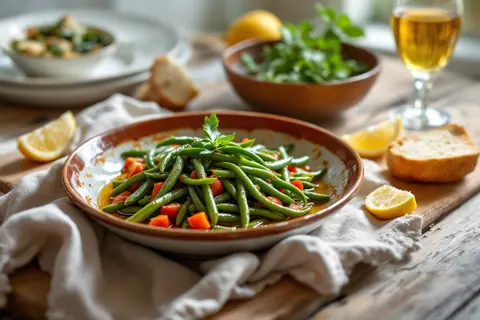
Bread first: warm flatbread or a crusty loaf torn into pieces. Then anything grilled, because the ezme cuts through fat and the haydari cools the heat. They also sit very well beside kısır, and next to a plate of lentil köfte wrapped in lettuce leaves they turn a few snacks into a supper. For a full meze spread, add a white bean salad, some olives and a dish of green beans in olive oil.
On a weeknight I spoon both onto a plate of plain rice with a fried egg on top. My mother would not approve. It is very good.
Cook's questions
Can I make acılı ezme the day before?
Not the whole thing. Chop the peppers, onion and parsley the day before and keep them covered in the fridge, then chop and drain the tomatoes and mix everything an hour before eating. Fully mixed ezme left overnight goes watery and the parsley darkens.
My haydari is runny. Can I save it?
Yes. Scrape it back into a muslin-lined sieve and leave it in the fridge for two or three hours, or beat in some crumbled white cheese, which thickens it at once. Next time, start with thicker yogurt.
Is acılı ezme very hot?
It should be warm enough to notice but not painful. The heat depends on your pepper paste and pul biber, so add them in two goes and taste in between.
The red board is the sign it was made properly. My grandmother never scrubbed hers clean, she said the colour was seasoning, and in the end the wood was the shade of a brick.
Filed under Meze & Salads

Ayla grew up in a Gaziantep family kitchen where bulgur came in four sizes and köfte was kneaded by feel. She lives in Bristol and writes about pilafs, kısır, köfte and the pepper pastes that hold them together.