
Pirinç pilavı: Turkish butter rice pilaf with şehriye
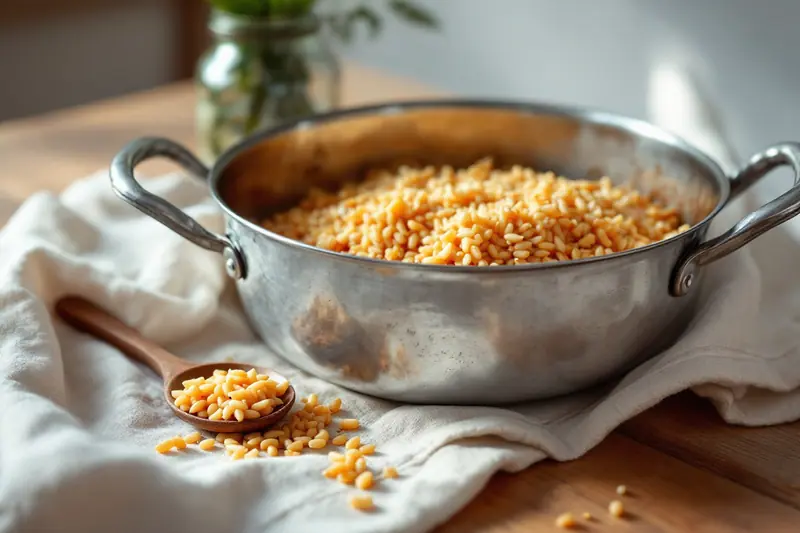
Every Turkish cook has a pilaf they trust, and they will tell you theirs is the right one. My mother's in Istanbul came out of a dented aluminium pot, grains standing apart, shining with butter, the little golden noodles scattered through it like confetti. When I moved to Toronto, my first attempts with whatever rice the corner shop sold were either gluey or crunchy, never both at once, which at least showed some consistency. It took a few months of measuring to get back to her pot.
Pirinç pilavı is not difficult, but it is exact. It depends on four things: the type of rice, getting rid of surface starch, the ratio of liquid, and the rest at the end. Get those right and the method almost does itself.
Short, medium or long grain
Turkish home cooks mostly use medium-grain rice for pilaf, and in Turkish shops you will find two main types.
- Osmancık type: a medium grain, fairly slim, that cooks up firm and separate. This is the everyday pilaf rice in many Turkish homes and the most forgiving one to learn with.
- Baldo type: plumper, chalkier and starchier, a larger round-ish grain. It drinks more water, swells more and gives a softer, richer pilaf. It is also the rice many cooks prefer for sütlaç, where that starch thickens the milk.
Outside Turkey, a Spanish or Italian medium-grain rice for paella or risotto is closer to either of these than long-grain rice is, but it is starchier, so rinse it well. Basmati and long-grain rice make a fine pilaf of a different kind: lighter, more separate, with less chew. They need less soaking and slightly less water. Short-grain sushi rice is too sticky.
Rinsing and soaking
Medium-grain rice is coated in loose starch from milling. If you cook it straight from the bag, that starch dissolves and glues the grains together. So the rice goes into a bowl of cold water and you rub it gently between your palms, then pour the cloudy water away. Repeat four or five times until the water is almost clear.
Then it soaks. My mother soaked hers in hot water with a spoonful of salt, and I have not found a better way. Hot tap water at about 60°C (140°F) is right: too hot to keep your hand in comfortably, not boiling. Leave it 30 minutes. Two things happen. The grain absorbs some water, so it cooks evenly from the outside in, and the warm salty water draws out a little more starch. Drain it thoroughly in a sieve and let it drip for five minutes. Wet rice in hot butter spits and steams instead of frying.
If you are short of time, a 15 minute soak still helps. No soak at all means adding about 1/4 cup more liquid per cup of rice and accepting a slightly stickier pilaf.
Şehriye, and frying the grains
Şehriye are small pasta pieces. For pilaf, most cooks use the rice-shaped kind (arpa şehriye, similar to orzo), though some families use broken thin vermicelli (tel şehriye). They are toasted in butter until deep golden before the rice goes in, which gives the pilaf its nutty smell and those flecks of colour.
Watch them closely. They go from pale to golden to burnt in about 30 seconds, so stir constantly over medium heat and take them as dark as a digestive biscuit, no further.
Then the drained rice joins them and is fried for three to four minutes. This step is called kavurmak, and it matters. The grains turn from chalky white to slightly translucent at the edges and start to click against the spoon. Each one gets a coat of butter, which keeps it separate later.
The ratio, in a table
Liquid is always measured by volume against the rice, and it must be hot, ideally just off the boil. These are the ratios that work for me with soaked rice in a pot with a tight lid.
| Rice | Soaked? | Liquid per 1 cup rice | Simmer time |
|---|---|---|---|
| Osmancık type, medium grain | yes, 30 min | 1 1/2 cups (360 ml) | 15 min |
| Baldo type, plump medium grain | yes, 30 min | 1 3/4 cups (420 ml) | 17 min |
| Long-grain or basmati | yes, 20 min | 1 1/4 cups (300 ml) | 12 min |
| Any medium grain | no | add 1/4 cup (60 ml) more | add 3 min |
A worked example for a crowd: for 12 people you need about 4 cups (760 g) of rice. Doubling the recipe below would give 6 cups (1.44 litres) of stock, but in a wide pot that size less water escapes per cup of rice, so I use 5 3/4 cups (1.38 litres) and add a splash at the end only if the grains are still firm.
Water or stock? Chicken stock gives the classic rich pilaf served with beans and stews. Water with a little more butter gives a cleaner flavour, which I prefer next to anything already rich.
The towel rest
When the liquid has been absorbed, small steam holes cover the surface and the rice is nearly done but still a little wet. Turn off the heat, lift the lid and lay a clean folded tea towel or two sheets of kitchen paper over the pot, then put the lid back on. Leave it 15 minutes.
Without the towel, steam condenses on the lid and drips back onto the top layer, making it soggy. With it, the rice finishes cooking in dry steam. Do not skip this, and do not stir the pilaf at any point while it simmers or rests.
Recipe
Pirinç pilavı with şehriye (Turkish butter rice pilaf)
Serves 6 as a side
- Prep
- 10 min
- Cook
- 22 min
- Rest
- 45 min
- Total
- 1 hr 17 min
Soaking
- 2 cups380 g medium-grain rice (osmancık type)
- 1 tsp6 g salt, for the soaking water
Pilaf
- 3 tbsp45 g butter
- 1 tbsp15 ml sunflower oil
- 1/4 cup45 g rice-shaped şehriye (orzo)
- 3 cups720 ml hot chicken stock or water
- 1 tsp6 g fine salt, less if the stock is salted
Method
- Rinse the rice in a bowl of cold water, rubbing it gently, and pour off the cloudy water; repeat 4 or 5 times until the water is almost clear.
- Cover the rice with hot tap water at about 60°C (140°F), stir in 1 tsp salt and leave to soak for 30 minutes.
- Drain the rice in a sieve and leave it to drip for 5 minutes.
- Melt the butter with the oil in a heavy pot over medium heat. Add the şehriye and stir constantly for 2 to 3 minutes until evenly deep golden.
- Add the drained rice and stir for 3 to 4 minutes, until the grains look slightly translucent at the edges and feel loose against the spoon.
- Pour in the hot stock, add the salt, stir once and bring to a lively boil.
- Cover tightly, turn the heat to the lowest setting and cook for 15 minutes without lifting the lid.
- Check quickly: the liquid should be gone and the surface covered in small steam holes. If liquid remains, cover and cook 2 to 3 minutes more.
- Turn off the heat, lay a clean tea towel over the pot, press the lid on top and leave to rest for 15 minutes.
- Fluff gently from the edges with a fork or flat spoon, lifting rather than stirring, and serve.
Cook's notes
- For a baldo-type rice, use 3 1/2 cups (840 ml) hot stock and simmer for 17 minutes.
- Leftover pilaf keeps 3 days in the fridge. Reheat it covered over low heat with 2 tbsp water and a small piece of butter.
When the pilaf goes wrong
- Sticky, clumped grains: not rinsed enough, too much liquid, or stirred while cooking.
- Hard centre, wet surface: liquid went in cold, or the heat was too high so the bottom absorbed the stock before the top cooked. Rest it longer under the towel.
- Burnt bottom: the heat was not low enough. A heat diffuser helps on strong gas burners.
- Bland: pilaf needs proper salt. Taste the stock before it goes in; it should taste slightly too salty on its own.
Cook's questions
Can I use olive oil instead of butter?
Yes, for a lighter pilaf, especially next to olive-oil vegetable dishes. Butter gives the classic flavour and gloss, and a mix of both is the usual compromise.
Should the pot be big or small?
Choose a heavy pot where the raw rice sits about 3 to 4 cm deep. Too wide and the stock evaporates fast; too narrow and the bottom overcooks before the top is done.
What is pilaf served with?
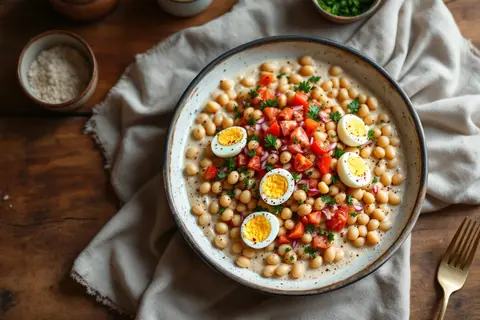
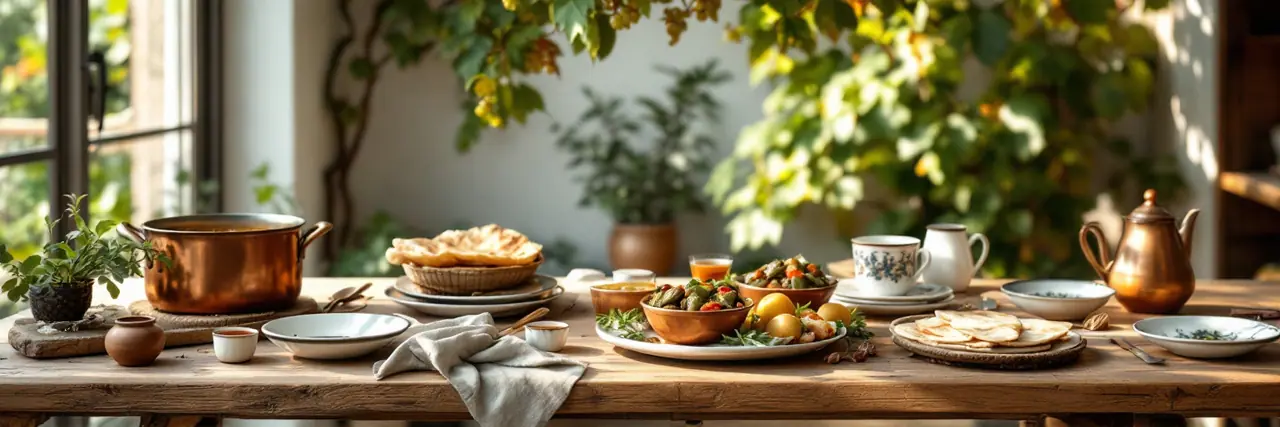
In Turkish homes it sits next to almost every stew. The best-loved pairing is kuru fasulye, white beans in tomato sauce, and it is the natural partner for chickpea and lamb stew. A spoonful of yogurt and a pickle on the side complete the plate.
Can I add anything else?
Cooked chickpeas, folded in with the stock, make nohutlu pilav. A handful of peas in spring, or a little allspice and currants for a festive pilaf, are also common.
Filed under Grains & Pulses, Kitchen Notes

Defne grew up in Istanbul and bakes in Toronto. She writes about milk puddings, syrupy sweets, pastry and festive tables, and she is exact about sugar, temperatures and timing.