
Iftar table at home: a menu and timing plan for the evening
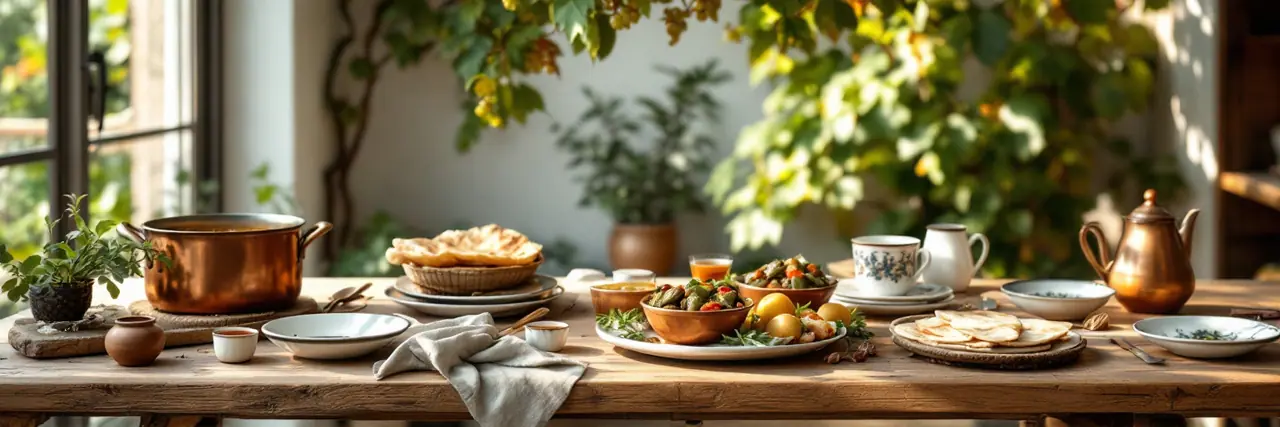
Iftar is the meal that ends the day's fast during Ramadan, eaten at sunset. In the Istanbul home I grew up in, and in my own kitchen in Toronto, it is the most anticipated meal of the day, shared with family and very often with guests, and it has a shape that most Turkish households would recognise. Something small and gentle comes first. Then soup. Then, after a pause, the main dishes, and later in the evening tea and a sweet.
Planning it is a particular kind of cooking problem. The meal has a fixed start time that cannot move, everyone sits down hungry at the same moment, and the cook may well be fasting too, which means less energy in the late afternoon and, for many people, no tasting at the stove. This piece is about solving that problem: what to put on the table, what to make the day before, and a timing plan that gets everything ready at once without a frantic last half hour.
Customs differ from family to family and from region to region, and what follows is a practical outline for a home table, not a rule.
The shape of the meal
Opening the fast
In many homes the fast is broken with a date and a glass of water, and often with a few olives, a little white cheese and warm flatbread on the side. These are small things, put on the table before anyone sits down, so that the first minutes need no cooking at all. A plate of dates and a jug of water at each end of the table is the most important part of the preparation, and the easiest.
In some households there is a short pause after this opening, for prayer, before the meal carries on. Build that pause into your plan. It gives the soup a few more minutes to come back to temperature and gives the cook a moment to sit down.
Soup
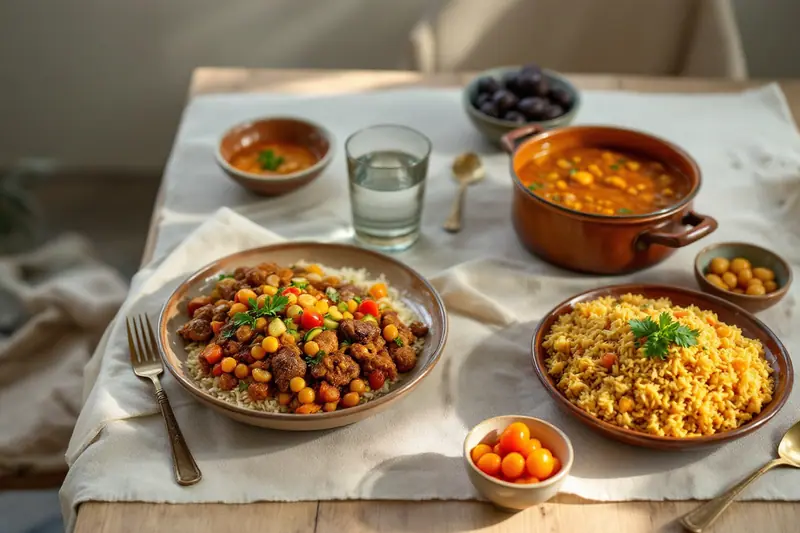
Soup is almost always next, and it is usually a soft, warm, mild one. After a long day without food, a bowl of something smooth is welcome. Lentil soup is the classic choice. A pot of red lentil soup is cheap, can be made hours ahead and reheated, and suits nearly everyone at the table. Ezogelin or a yogurt soup are good alternatives on other nights.
The main course and pilaf
The main dish is generous but not complicated. Stews are ideal because they taste better reheated: chickpea and lamb stew, a meat and vegetable stew, or baked köfte with potatoes. Beside it goes a pilaf, either rice or bulgur. A plain buttery rice pilaf is the one dish I always cook fresh, because it takes thirty minutes and does not reheat as well as the rest.
Salad
A sharp salad cuts through the richness: chopped tomato, cucumber, green pepper, onion and parsley with lemon and olive oil. Prepare the vegetables ahead, dress at the last moment.
Something sweet, later
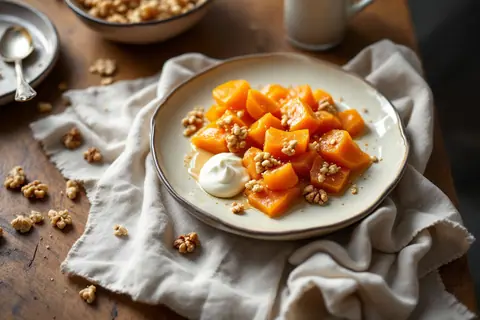
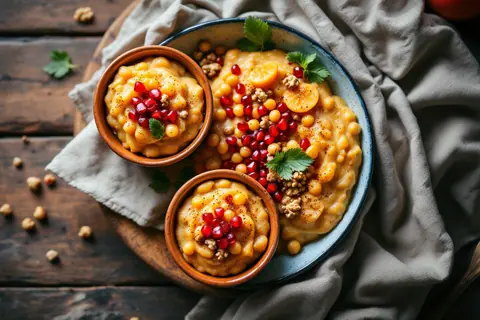
Sweets often come an hour or so after the main meal, with tea. Ramadan tables in Turkey are known for güllaç, thin starch sheets layered with milk and nuts, but at home I usually make something lighter that can be prepared the day before: baked rice pudding, or the cold apricot compote below. Fruit is welcome too.
Seasoning when you cannot taste
Many people who are fasting choose not to taste as they cook. That changes how you season. Here is what works for me.
Weigh or measure the salt. For soups, about 1 1/2 teaspoons of fine salt per litre of liquid is a reliable starting point, and for pilaf, 1 teaspoon per cup of rice. Write those numbers down once and you will not need to taste.
Lean on dishes you have cooked before. Iftar is not the night to try a new recipe that depends on adjusting at the end.
Put the final seasoning on the table: lemon wedges for the soup, pul biber (Turkish chilli flakes), salt, sumac for the salad. People can finish their own bowls.
What to make the day before
The calmest iftar is one where half the work happened the previous evening, after the meal, when there is energy again.
- The stew, cooked completely and cooled. It keeps in the fridge in its pot.
- The sweet: rice pudding, compote or both.
- The soup, cooked to the point just before blending, if you want an even shorter afternoon.
- Dried chickpeas or beans, soaked overnight if the stew needs them.
- Salad vegetables can wait, as they are better cut on the day.
Hour-by-hour plan for the day
This plan assumes the fast ends at 18:30 and that the stew and the sweet were made the day before. Move every time by the same amount for your own sunset.
| Time | What to do |
|---|---|
| 15:30 | Take the stew out of the fridge. Rinse the lentils for the soup. |
| 16:00 | Start the soup: onion, carrot, lentils, water. Simmer about 35 minutes. |
| 16:45 | Wash the rice and leave it to soak in warm salted water. |
| 17:00 | Chop the salad vegetables and herbs; keep them separately in the fridge, undressed. |
| 17:30 | Set the table: dates, water jugs, olives, cheese, bread basket, lemon wedges. |
| 17:45 | Start the pilaf. It cooks for about 20 minutes and rests for 10. |
| 17:50 | Put the stew on a low heat to reheat slowly, stirring now and then. |
| 18:10 | Blend the soup and keep it hot on the lowest heat. Warm the bread at 180°C (350°F) for 5 minutes. |
| 18:20 | Dress the salad. Fill the glasses. Fluff the pilaf and cover it with a cloth. |
| 18:30 | Dates and water, then soup. |
| About 18:50 | Stew, pilaf and salad on the table. |
| About 20:00 | Tea, rice pudding, compote. |
The busy stretch is 17:45 to 18:20, and even that is mostly waiting. If someone offers to help, give them the table and the salad.
How much to cook
People who have fasted all day eat less than you expect at first, then come back for more over the evening. These quantities have worked well for my family.
| Dish | For 6 | For 12 |
|---|---|---|
| Dates | 18 (3 each) | 36 |
| Soup | 1.5 litres | 3 litres |
| Stew | 750 g meat with chickpeas | 1.5 kg meat with chickpeas |
| Rice for pilaf | 2 cups (380 g) | 4 cups (760 g) |
| Salad | 4 tomatoes, 2 cucumbers | 8 tomatoes, 4 cucumbers |
| Pudding or compote | 6 small bowls | 12 small bowls |
| Bread | 1 large flatbread | 2 large flatbreads |
For twelve, cook the pilaf in two pots rather than one big one. A very large pot of rice cooks unevenly and the bottom catches before the top is done.
A light sweet to make ahead
Hoşaf is a cold compote of dried fruit in its own syrup, served in small bowls with plenty of the liquid. It is gentle, refreshing and takes twenty minutes of actual cooking. Dried apricots are my favourite; dried figs, prunes or a mix work just as well.
Recipe
Kayısı hoşafı (cold dried apricot compote)
Serves 6 in small bowls
- Prep
- 5 min
- Cook
- 20 min
- Rest
- 4 hr
- Total
- 4 hr 25 min
Compote
- 1 1/2 cups250 g dried apricots
- 4 cups960 ml water
- 1/3 cup65 g sugar
- 11 cinnamon stick, or 3 cloves
- 11 strip of lemon peel
- 1 tbsp15 ml lemon juice
Method
- Rinse the apricots under cold water and put them in a bowl with the 4 cups of water. Leave to soak for 1 hour.
- Tip the apricots and their soaking water into a saucepan and add the sugar, cinnamon and lemon peel.
- Bring to the boil over medium heat, stirring until the sugar dissolves.
- Lower the heat and simmer gently, uncovered, for 15 minutes, until the apricots are plump and soft but still whole.
- Take off the heat, stir in the lemon juice and lift out the cinnamon and lemon peel.
- Leave to cool to room temperature, then chill for at least 3 hours. Serve cold in small bowls with plenty of the syrup.
Cook's notes
- Hoşaf keeps for 4 days in a covered jar in the fridge and the syrup gets more fragrant each day.
- For a mixed compote, use 100 g apricots, 100 g prunes and 50 g raisins, and add the raisins for the last 5 minutes only.
Small things that make the evening easier
Fill water jugs and put them in the fridge in the morning. On a long day, cold water on the table at sunset matters more than any dish.
Warm the soup bowls in a low oven or with hot water from the kettle. Soup served in cold bowls loses its heat in minutes.
Keep the tea things ready: the kettle filled, the glasses out on a tray, the sugar bowl filled. Tea arrives later, when everyone has moved to softer chairs, and nobody wants to start from scratch at that point.
Plan for leftovers. Many families eat a meal before dawn as well, called sahur, and the stew, a little pilaf and the compote make an easy one. Put them in the fridge in portions before you sit down for tea, so the morning needs no thought.
Keeping a month of evenings varied
Cooking iftar every night for a month is a different job from cooking it once. What helps is a loose rotation rather than a fixed menu: change one or two dishes each evening and keep the rest of the structure the same, so you are never planning from a blank page.
Rotate the soups. Red lentil one night, yogurt soup with rice and mint the next, then ezogelin, then a tomato and vermicelli soup. All four are cheap, and all four can be ready before 17:00.
Rotate the mains between a stew, a baked dish and something stuffed. Stuffed peppers, köfte with potatoes in the oven and a bean stew all hold well, so the timing plan above barely changes.
Swap rice pilaf for bulgur pilaf two or three nights a week. Bulgur pilaf is quicker and pairs especially well with bean and chickpea dishes.
A meatless main works well a few times a week: a white bean stew with olive oil, green lentils with bulgur, or green beans braised in tomato. On those nights, serve a little more cheese and yogurt on the side so the table still feels generous.
When guests are coming
Invitations to iftar are a large part of the month in many homes, and hosting is a pleasure as much as a job. If you are cooking for guests, keep the menu to dishes you know well and add one more thing to the opening plate rather than one more main course. A bowl of good olives, some sliced cucumber, a dish of soft cheese with herbs: these fill the table without adding anything to the stove.
And set the table early. At 18:25, when the dates are on their plates and the soup is steaming in its pot, a finished table is the thing that makes the whole kitchen feel calm.
Filed under Seasonal Table

Defne grew up in Istanbul and bakes in Toronto. She writes about milk puddings, syrupy sweets, pastry and festive tables, and she is exact about sugar, temperatures and timing.