Firik pilavı: smoky freekeh pilaf with chickpeas and butter
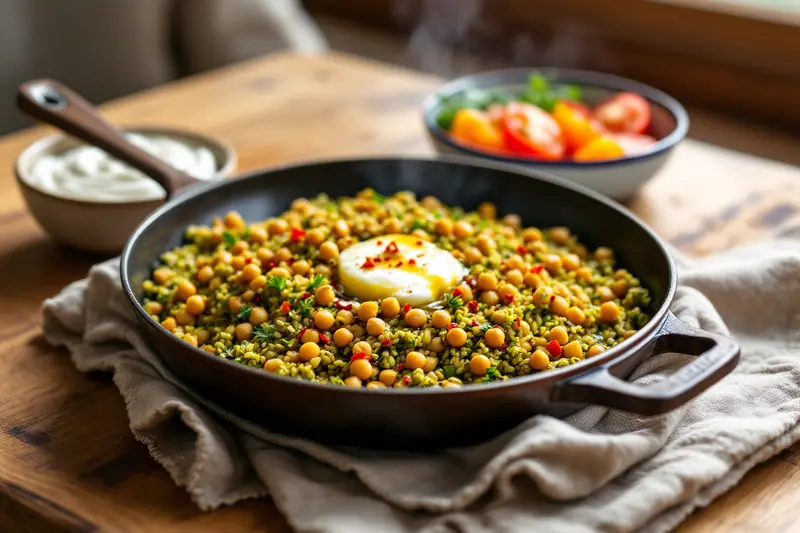
I grew up on the Aegean side of Turkey, where pilaf mostly meant rice or bulgur. Firik came into my life later, through a friend whose family is from Gaziantep. She opened a bag, held it under my nose, and asked what I smelled. Smoke, I said, and something like toasted hay. She nodded as if I had passed an exam. Then she made the pilaf, and I have been buying firik ever since.
Firik is what we call freekeh in Turkish: wheat harvested young, while the grains are still green and soft, then roasted in the field so the straw and husks burn away while the moist kernels inside only scorch lightly. After threshing and drying, you get grains that are greenish brown, firm, and full of a gentle smoky flavour. In the south-east, around Gaziantep, Kilis and Hatay, this roasting happens in late spring and early summer, when the wheat is at exactly the right stage. A good part of the region's year of pilaf comes from those few weeks.
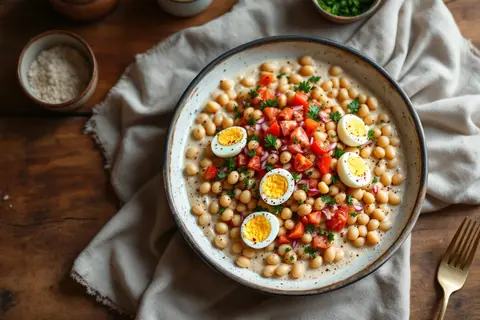
Firik pilavı is the simplest way to cook it. Butter, onion, a little pepper, some chickpeas, and stock. It is the kind of dish that tastes like much more work than it is.
Cracked or whole: what you have changes the method
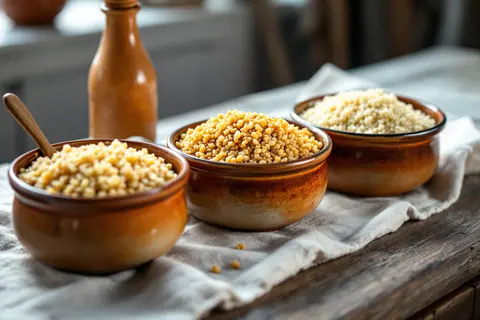
Freekeh is sold two ways. Cracked freekeh is broken into pieces about the size of coarse bulgur. Whole freekeh is the intact grain, which looks like a small, slightly flattened wheat berry. In Turkish shops you will mostly find the cracked kind, often labelled simply firik. In other shops you may only find whole.
Both make excellent pilaf, but they need different amounts of liquid and time. Here is how they compare with coarse bulgur, which many readers will know better and which you can read more about in the guide to cooking bulgur:
| Grain | Liquid per 1 cup grain | Simmer | Rest off the heat | Texture |
|---|---|---|---|---|
| Cracked freekeh | 2 cups | 20 to 25 min | 15 min | Separate, chewy, smoky |
| Whole freekeh | 2 1/2 cups | 40 to 45 min | 15 min | Firmer, bouncy, very chewy |
| Coarse bulgur | 2 cups | 15 min | 15 min | Soft, fluffy, nutty |
The recipe below uses cracked freekeh. For whole freekeh, use 1 1/2 cups grain with 3 3/4 cups stock and simmer for 40 to 45 minutes. Soaking whole freekeh for 30 minutes beforehand trims about 10 minutes off the simmer.
Clean it first
Because firik is roasted in the field, it sometimes carries little bits of straw, burnt husk or a tiny stone. Spread the grains on a tray, run your fingers through them near a window, and pick out anything that is not grain. It takes three minutes. Then rinse in a sieve under cold water until the water runs mostly clear. Some of the darkest scorched bits will float; pour those off. Let the freekeh drain for 10 minutes while you chop the onion.
Butter matters here
You can make this pilaf with only olive oil and it will be good. Made with butter, it is something else. The smoke in the grain and the sweetness of the butter belong together. I use a mixture: olive oil to stop the butter from burning while the onions cook, then an extra spoonful of butter browned with pul biber (Turkish red pepper flakes) poured over at the end. In Gaziantep homes the finishing butter is often more generous than mine.
Chickpeas and other additions
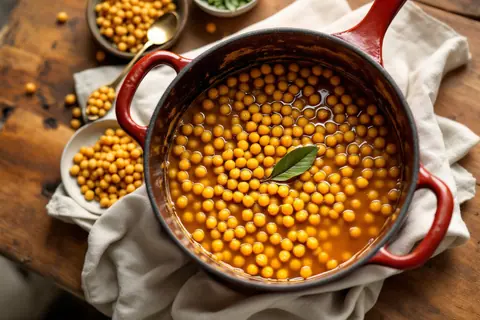
Chickpeas are the classic partner. They make the pilaf filling enough for a light supper and their softness balances the chewy grain. Use home-cooked chickpeas if you have them; I usually cook a big batch and freeze it in cups. Tinned are fine, rinsed well.
Other traditional additions: small cubes of lamb, browned before the onions go in; or shredded chicken, with chicken stock as the liquid. A spoonful of red pepper paste stirred in with the peppers gives the pilaf a reddish tint and a rounder flavour, and many cooks in the region use it. Leave it out if you want the smoky flavour to stay at the front.
Check the pan, not the clock
When the timer goes off, do not stir. Tilt the pan gently. If you still see liquid pooling at the lowest edge, put the lid back and give it 3 to 5 more minutes. When the surface has small holes, like little steam vents, and there is no liquid when you tilt, it is done. Then the towel goes on: a clean tea towel between the pan and the lid for 15 minutes. It catches the steam so the grains firm up and separate instead of turning soggy.
Recipe
Firik pilavı (freekeh pilaf with chickpeas)
Serves 4 as a main, 6 as a side
- Prep
- 15 min
- Cook
- 40 min
- Rest
- 15 min
- Total
- 1 hr 10 min
Pilaf
- 1 1/2 cups255 g cracked freekeh (firik)
- 2 tbsp30 g butter
- 2 tbsp30 ml olive oil
- 1 medium1 medium onion, finely chopped
- 22 long green peppers, deseeded and diced
- 1 tsp5 g Turkish red pepper paste (biber salçası), optional
- 1 cup160 g cooked chickpeas, drained
- 1 tsp1 tsp salt (less if your stock is salted)
- 1/2 tsp1/2 tsp black pepper
- 3 cups720 ml hot chicken or vegetable stock
Pepper butter
- 1 tbsp15 g butter
- 1 tsp1 tsp pul biber (red pepper flakes)
Method
- Spread the freekeh on a tray and pick out any straw, husk or stones, then rinse it in a sieve under cold water until the water runs mostly clear and leave to drain for 10 minutes.
- Melt the butter with the olive oil in a heavy pan over medium heat and cook the onion for 6 minutes until soft and golden at the edges.
- Add the green peppers and cook for 3 minutes, then stir in the pepper paste, if using, for 1 minute.
- Add the drained freekeh and stir for 3 minutes until the grains look dry and smell toasty.
- Add the chickpeas, salt, black pepper and hot stock, stir once and bring to the boil.
- Cover, turn the heat to the lowest setting and simmer for 20 to 25 minutes, until the surface shows small steam holes and no liquid pools when you tilt the pan.
- Turn off the heat, lay a clean tea towel over the pan, put the lid back on and rest for 15 minutes.
- Melt the butter for the topping in a small pan, add the pul biber and sizzle for 30 seconds.
- Fluff the pilaf with a fork, spoon it onto a platter and drizzle the pepper butter over the top.
Cook's notes
- For whole freekeh, use 3 3/4 cups (900 ml) stock and simmer for 40 to 45 minutes.
- Leftover pilaf keeps three days in the fridge; reheat with a spoonful of water and a lid.
Scaling it for a crowd
Firik pilavı is a good dish for a long table because it holds its heat and does not go sticky. The ratio stays the same however much you make: 2 cups of stock to every cup of cracked freekeh. For twelve people as a side, use 3 cups (510 g) freekeh and 6 cups (1.44 litres) stock, with 2 cups of chickpeas and two onions. Use your widest pan, so the grain sits no more than about 6 cm deep, and add 5 minutes to the simmer. A deep narrow pot cooks unevenly, soft at the bottom and firm at the top.
What to serve with it
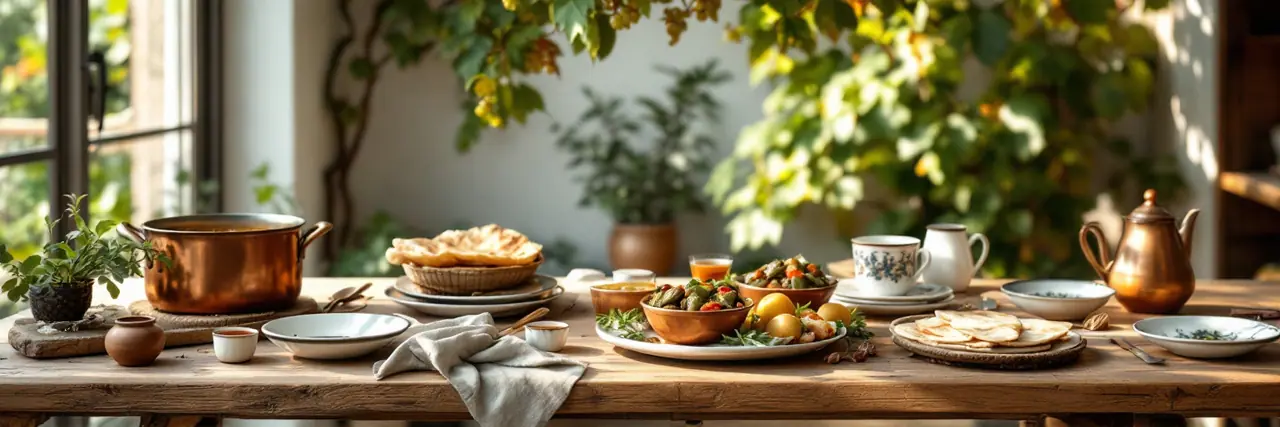
Firik pilavı wants something cool and sharp beside it. A big bowl of plain yogurt is the minimum. In summer I add a salad of sliced tomatoes, cucumber and onion with sumac and plenty of olive oil, and on a bigger table a dish of zeytinyağlı green beans or stuffed peppers. In colder months it sits well under a ladle of chickpea and lamb stew, where the smoky grain soaks up the red broth.
It is also very good cold, the next day, dressed with lemon, olive oil, chopped parsley and spring onions, almost like a grain salad.
Storing
Cooked freekeh keeps three days in the fridge. Reheat it in a covered pan with a tablespoon of water per cup of pilaf, over low heat for 5 minutes. It freezes well, too: spread it out to cool quickly, then freeze in bags for up to two months. Uncooked firik should be kept in a sealed jar in a cool cupboard, where it stays fragrant for months. If it ever smells musty instead of smoky, throw it out.
If you are new to whole grains in general and wondering where freekeh sits next to the others, bulgur, couscous and quinoa compared covers the basics.
My Gaziantep friend still checks every bag I buy. She opens it, smells it, and either nods or tells me where I should have gone instead.
Filed under Grains & Pulses

Bora is from İzmir and cooks the Aegean way: olive oil, vegetables, herbs and a table full of mezes. He lives in Lisbon, shops at the market most mornings and writes about dolma, salads and dishes served at room temperature.