
Roasted chickpea crisps: crunchy oven chickpeas with spice mixes
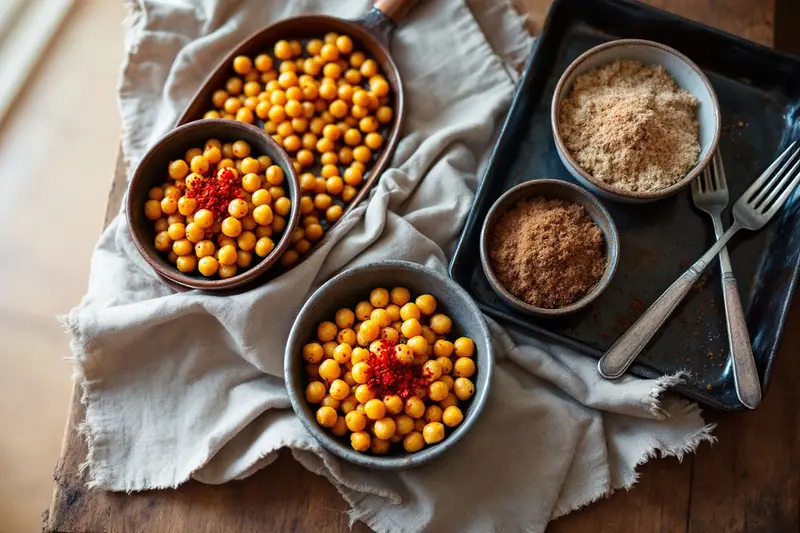
In Turkey you can buy roasted chickpeas, leblebi, from nut shops by the scoop: dry, pale and so hard they squeak against your teeth. They are made by specialist roasters, in several rounds of roasting and resting, and I have never managed anything like them at home. What I can make in an ordinary oven is something different and, in its own way, just as addictive: chickpeas that are crisp and hollow on the outside, faintly creamy at the very centre, and coated in whatever spice mix I fancy that day.
The first few trays I made were disappointing. Some chickpeas were crisp, some were chewy, and by the next morning they had all gone soft. So I did what I always do and made small trays side by side, changing one thing at a time. Three things decide the result: how dry the chickpeas are when they go in, when the oil and spices go on, and what you do in the last 15 minutes.
Start with cooked chickpeas
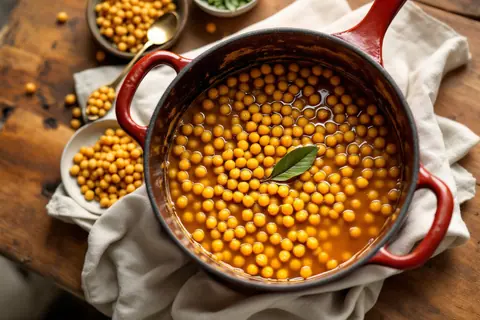
You can use tinned chickpeas or ones you have cooked yourself. Home-cooked are a little cheaper and you control the salt; if you cook a big pot on Sunday, as I do, some of it can become crisps on Monday. Our guide to cooking dried chickpeas covers soaking and simmering. For crisps, stop cooking while the chickpeas are tender but still hold their shape. Overcooked, split chickpeas roast unevenly and some will burn.
Drain them well. If they came from a tin, rinse off the starchy liquid, because it turns sticky in the oven.
Drying makes the biggest difference
Water is the enemy of crunch. The oven has to drive it out of the chickpeas before they can crisp, and any water on the surface simply steams them first. I tested three trays from the same pot of chickpeas:
| Tray | How I dried them | Result after 30 minutes at 200°C (400°F) |
|---|---|---|
| 1 | Drained in a sieve only | Pale, leathery outside, soft inside, went chewy within an hour |
| 2 | Rubbed in a tea towel | Golden and crisp, a few soft ones, held up for the evening |
| 3 | Rubbed in a tea towel, then left on the tray for 30 minutes | Evenly golden, crisp right through, still crunchy the next day |
So: tip the drained chickpeas onto a clean tea towel, fold it over and roll them around gently with your palms. Many of the thin skins will come loose. Pick those out, as they burn and taste bitter. Then spread the chickpeas on the baking tray and leave them uncovered for half an hour, or longer if you have time. You will see the surface go matt.
Some people peel every chickpea by hand. I tried it once. The peeled ones were a little crisper, but not enough to justify half an hour of fiddling, and the skins that come off in the towel are the ones that matter.
Oil before, spices after
You need very little oil: about a tablespoon and a half for three cups of chickpeas, just enough to make every one shine. Too much oil fries them in patches and leaves them greasy. Olive oil is fine at this temperature; sunflower oil gives a cleaner taste if your spice mix is sweet.
Spices are another matter. Ground spices burn in a hot oven long before the chickpeas are done, and burnt paprika or cumin tastes acrid. So I roast the chickpeas with only oil and salt, and toss them with the spice mix the moment they come out, while they are still hot and slightly oily. The spices stick and keep their colour.
Heat and time
A hot oven, 200°C (400°F), or 180°C (350°F) if your oven has a fan, and a heavy tray that does not warp. Spread the chickpeas in a single layer with a little space between them; crowded chickpeas steam. Roast for 25 to 35 minutes, shaking the tray every 10 minutes so they colour evenly.
How do you know they are done? Take one out, let it cool for a minute and bite it. It should crack, not squash. The colour is a deep gold and the skins look slightly wrinkled and blistered. If you hear them rattle on the tray like small stones when you shake it, you are close.
Here is the trick that made the biggest difference after drying: when they are done, turn off the oven, prop the door open a few centimetres with a wooden spoon and leave the tray inside for 15 to 20 minutes. The chickpeas finish drying in the falling heat without getting darker, and they stay crisp for much longer.
Recipe
Roasted chickpea crisps
About 2 1/2 cups, serves 4 as a snack
- Prep
- 10 min
- Cook
- 30 min
- Rest
- 45 min
- Total
- 1 hr 25 min
Chickpeas
- 3 cups480 g cooked chickpeas, drained (two 400 g tins, or from about 1 1/4 cups dried)
- 1 1/2 tbsp22 ml olive or sunflower oil
- 1/2 tsp3 g fine salt
Spice mix (choose one, see below)
- 2 tsp2 tsp spice mix of your choice
Method
- Rinse the chickpeas if they are from a tin and drain them well in a sieve.
- Tip them onto a clean tea towel, fold it over and roll them gently with your palms; pick out any loose skins.
- Spread the chickpeas on a large baking tray and leave them uncovered for 30 minutes, until the surface looks matt and dry.
- Heat the oven to 200°C (400°F), or 180°C (350°F) with a fan.
- Drizzle the chickpeas with the oil, sprinkle with the salt and shake the tray until every chickpea is glossy, then spread them out in one layer.
- Roast for 25 to 35 minutes, shaking the tray every 10 minutes, until deep golden, blistered and crisp when you bite one that has cooled for a minute.
- Turn off the oven, prop the door open a few centimetres and leave the tray inside for 15 minutes.
- Tip the warm chickpeas into a bowl, add the spice mix and toss until evenly coated, then let them cool completely on the tray.
Cook's notes
- Store only when completely cold, in a jar with the lid resting on top, not screwed shut.
- To re-crisp chickpeas that have softened, spread them on a tray and heat at 180°C (350°F) for 5 minutes.
Four spice mixes from a Turkish cupboard
Each mix is enough for one tray. Stir the spices together in a small bowl before you start so they are ready when the tray comes out.
- Pul biber and cumin. 1 teaspoon pul biber, 1/2 teaspoon ground cumin, a pinch of salt. Warm and savoury, my default.
- Sumac and thyme. 1 teaspoon sumac, 1/2 teaspoon dried thyme (kekik), 1/2 teaspoon toasted sesame seeds. Sour and herby, very good with a cold drink.
- Dried mint and lemon. 1 teaspoon dried mint, the finely grated zest of half a lemon, a pinch of black pepper. Add the zest only when the chickpeas have cooled a little, or it turns brown.
- Cinnamon sugar. 1 teaspoon caster sugar, 1/2 teaspoon cinnamon, roasted with sunflower oil and less salt. Children in our house prefer this one by a long way.
If you want to read more about the spices themselves, we have a separate piece on Turkish pantry spices.
Keeping them crisp
This is where most batches fail. Roasted chickpeas pick up moisture from the air, and a sealed container traps whatever steam was still in them. Let them cool completely, at least an hour, on the tray. Then store them in a glass jar with the lid resting loosely on top, not screwed down. They will stay crisp for two or three days this way. In a humid kitchen, expect less.
If they do soften, five minutes in a hot oven brings them back. I would not keep them longer than four days, as the oil starts to taste stale.
How to eat them
As a snack with tea or a cold beer, of course, in a bowl next to a bowl of stovetop popcorn on a film night. They also make a good crunchy topping: scatter a handful over a lentil soup, a green salad or a bowl of yogurt with garlic and herbs just before serving, so they do not have time to soften. And the plain salted version, without spices, is a useful thing to pack in a lunch box.
Filed under Grains & Pulses

Murat's family is from the Black Sea coast; he lives in Rotterdam. He likes to test things side by side: soaking times, oven temperatures, bread doughs, chickpeas cooked five ways, and the weeknight plans that come out of it.